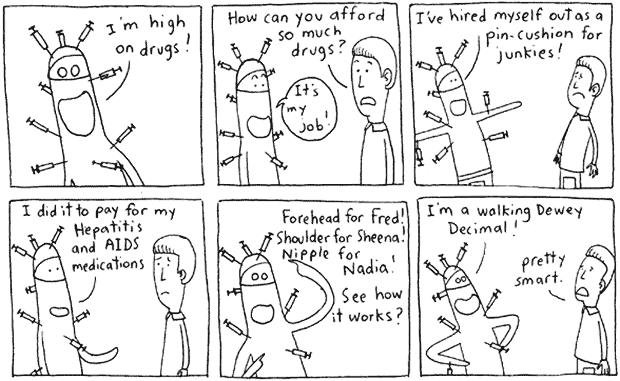
There are two historical points that need to be considered when looking at the comic, the first of which is the history of the comic itself.What is the purpose of the comic strip, and what topics are frequently addressed by the author?This comic in particular is entitled White Ninja's New Low, with the series having the name White Ninja Comics.Published online as a webcomic, every issue features a nameless white ninja who performs activities ranging from far-fetched to mundane.Furthermore, each publication is self-standing, or not linked to previous issues, and the humor is typically non-sequitur.
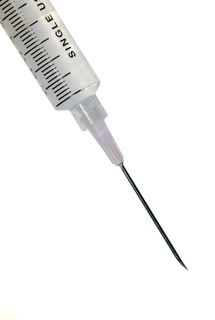
The second point that needs to be evaluated is the particular historical context of the subject matter (drug addiction; specifically drugs via injections).Drugs themselves have been around since early BC, and can either be inhaled, injected, or absorbed in other ways.According to drug-rehabs.org, alcohol and narcotics such as marijuana have been used since 4000 BC, but it was not until the late 18th century, that the hypodermic needle was invented.Currently, the drugs are consumed around the world, with people injecting various substances in their bodies to "get high."In particular, however, the use of drugs is and has been prevalent primarily in Europe, North America, and Asia.
After looking at this background information, one can further understand and analyze the message being portrayed in the comic White Ninja's New Low.Whereas before I didn't know what or who the blob-shaped character was, I now know that he is the main character in the series: he is the White Ninja.Furthermore, I can see that these six panels do not rely on previous information from an earlier publication.The point about the Dewey Decimal makes little sense, but it is not supposed to, since it is part of the non sequitur humor.In addition, this comic is about drugs and the vicious drug cycle, and knowing background information on this problem, is important as well.The fact that drugs are used on a global scale, for instance, can increase the significance of this subject matter.Due to the fact that both characters are speaking English, however, one can conclude that the comic is directed towards a more Western audience.
A comic strip is an unusual medium in that it has the capability to convey a more serious message in a more relaxed manner than other types of communication.Since drug use may be a touchy subject, readers may be more likely to read and think about the message in the form of a comic rather than an essay.If so, this, in turn, may lead to a more effective means of portraying the message to this audience.Furthermore, the comic medium reaches a variety of ages, as not only does it appeal to adults but to some teens as well.
Works Cited
Hoge, Warren. "The New York Times Log In." The New York Times - Breaking News, World News & Multimedia. 25 June 2007. Web. 22 Mar. 2010. {http://www.nytimes.com/2007/06/26/world/asia/26nations.html}.
Entitled New Low, this comic can be viewed on the white ninja comic website. Although it is somewhat different from the typical Sunday-paper comic, this series of panels uses many of the rhetorical concepts and techniques as defined in chapter 15 of CDA, as well as in Scott McCloud's book The Vocabulary of Comics. Thegeneral theme within this particular comic appears to be people who do things for others without even thinking about the implications of these actions. Specifically, it uses drugs and "druggies" as an extension for this message. It also briefly mentions how this type of lifestyle is one of a circular path, with one bad thing leading to another.
The first and most basic device used within the panels is the simplicity with which the characters are drawn. As McCloud mentions within his Vocabulary of Comics, the primary reason that people connect with the various symbols and messages within comics is that they are simple enough so that people can relate with them, or apply them to their own life. If there were too many details to make the pictures seem more realistic, then people would not be able to associate themselves as closely with certain figures. In fact, while the guy on the right is simply a stick figure with definition, the guy on the left hardly resembles anyone. Thus, from the reader's experience, he/she can mentally relate a person they know with one of these characters. In addition, the more relaxed atmosphere allows the author to approach the serious subject of drugs to a wider range of audience. As I am planning on writing/drawing my own comic for this assignment, I hope to employ this simplistic effect in my work as well. Instead of using lots of detail to make the message applicable to a specific audience, I plan to expand this audience by being less specific/detailed. In addition, the use of simple symbols in my comic, such as the syringes in this one, allow for further connection.
Another device that is used within the comic strip is the implementation of a specific typeface: script. As defined in CDA's chapter 9, "typography is the study of how lettershapes-on paper or on screen-work functionally and rhetorically." In using a script letter-type, or one that looks as though it is handwritten, the author gives the viewer some information regarding the types of characters in the story. In this instance, the letters look like they were written somewhat sloppily, and thus communicate a certain unprofessional or relaxed atmosphere to the reader. Coupled with the theme of drugs within the comic, as well as the body form of the character on the left, this style of communication relates to the message being portrayed. As I am thinking about doing a comic that discusses a more serious subject such as trash, recycling, and the environment, I will have to think about using a more "creditable" typeface, such as sans serif.
In writing this first essay regarding the global argument behind the photo Very Bad, I learned how to deconstruct the elements of a photo and then depict the argument based on those elements. Throughout this process, however, there were many challenges that I had to overcome, the first of which was actually depicting the argument of the photo. I originally thought the argument was that the woman had been raped, as shown by her gestures. I soon found out through class discussions, however, that an argument is much more in-depth than simply inferring observations from the photo. By deconstructing the elements of the photo via pathos and logos, I was able to see that, in the context of a westerner looking at the photo, it evoked a sense of sympathy, thus provoking a desire to aid these people.
Another difficulty that I had was figuring out which elements of the photo would best support my argument. Vectors of attention immediately stood out, as the woman conveys much emotion through her gestures. Beyond that, however, I had to pick apart the rest of the photo to see that the framing/cropping isolated the few elements within the image, supporting the argument. In addition, I found out that the coloration, or contrast of the dark hues of the background and the bright hues of the clothing, also emphasized the woman. Thus, framing and coloration became my other key points adding to the argument.
As far as global revisions, besides adding bits and pieces to each of the key points over the course of the drafts, the most drastic change that I made was to rearrange these supporting points. In my first draft, the "statement of organization" looked as such, “Specifically, technical elements including vectors of attention, framing, as well as coloration function to forward this argument via appeals to pathos and logos.” However, due to the fact that the framing and coloration used logos in order to focus on the vector of attention, the woman, I switched the order of these supporting points to framing, coloration, and then vectors of attention.
Besides switching the key points, I also made a relatively drastic change to my introduction, as it was a bit lengthy in my first draft. Originally, I included much information regarding dates in the history of the Congo such as, “In 1997, the Mobutu regime, which was the empowered government in Congo, was overthrown with the support of Rwanda and Uganda.” I realized that this information was not salient to my argument, however, and so I replaced the irrelevant history with information on the photographer. In addition, I found that I had not addressed the “so what?” question in the conclusion, so I added several sentences such as, “Looking at this situation from a Western perspective, then, the issue goes beyond sympathy.” I believe that this concludes the essay more appropriately, and keeps the reader engaged until the end.
Throughout history, the weapon of rape has often accompanied acts of war between different countries. Designed to humiliate and devastate communities, this weapon demonstrates power, supremacy, and dominance via the sexual violation of women. Perhaps the major reason for its effectiveness, however, is the fact that victims are typically silent and passive to the oppressor, as discussed in the above video, The Greatest Silence, Rape in the Congo. Besides negative physical effects, a loss of self-esteem contributes to a weak and dejected psyche in victims (RAINN). This state of depression, then, does nothing to prevent future attacks.
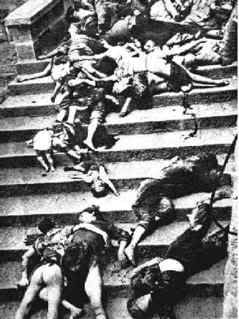
Although this weapon has existed since biblical times, there are a few major events in the modern era that have embodied the destruction of rape. The infamous Rape of Nanking in 1937 was one such incident that displayed the magnitude of destruction rape could have on a culture. During this particular massacre, an estimated 20-80,000 Chinese women were raped by invading Japanese solders: many of whom were physically beaten, sexually abused, and slaughtered. (BBC News…The Rape of Nanking)
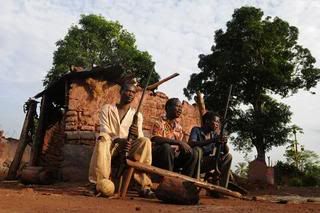
Perhaps the most recent and extensive use of rape, however, has been in the Democratic Republic of Congo, located in central Africa. Established in 1960, the country’s history has been characterized by political and social instability. (CIA World Factbook). In 2003, it finally looked as though peace had been reached, as a treaty was signed among neighboring countries. Unfortunately, however, this agreement had little effect, as acts of violence continued to mar the lives of natives. One of the biggest, but unseen, tragedies has been the raping of thousands of women by various military forces: both foreign and domestic. According to the video Congo: Rape as a Tool of War by the Washington Times, “Tens of thousands of women have been raped in Congo in the last ten years of civil war…[with] an average of 1,100 rape cases reported each month.” The video also says that rape is a weapon of choice because it is cheaper than using bullets, and it is guaranteed to keep a region submissive (Congo's Greatest Shame).
Besides looking at statistics, news reports have revealed the severity of the situation via other means. One photographer, Anna Kari, has taken photos in the Eastern provinces of Congo, depicting daily life in that area. She has published a series of photos of two women entitled Tales of Rape in DR Congo, which exemplify how rape has changed their lives. One such photo, entitled Very Bad, is about Aimerance, a seventeen year-old woman, who has been raped while serving time in the national army (BBC News: Photo Journal). This particular image illustrates the assistance and support needed by victims of rape in Congo to prevent further exploitation of natives. Specifically, technical elements including framing, coloration, and vectors of attention function to forward this argument via appeals to logos and pathos.
When one first looks at the photo, the woman immediately stands out, which plays an important role in the argument of the image. A powerful element that contributes to this focal point is the way in which the image is framed and cropped. By isolating the receding room, the wall, and the woman as the only elements in the picture, the photo presents a clear visual hierarchy. Thus, via logos, the image is better able to “shap[e] someone else’s attention,” meaning the viewer’s (Compose, Design, Advocate, 285). In other words, restricting the number of elements within the frame directs the reader’s attention to specific aspects of the photo. The pinnacle of this hierarchy includes the woman, as she is the closest in the foreground. This is important, as the viewer is then drawn to inspect her gestures more carefully to find a meaning to them.
In addition to framing, the alignment of these key elements also shapes how the reader perceives the photo. Due to the orthogonal orientation of the wall and background in respect to the frame, the audience uses the grid-like structure to inspect all parts of the photo. Eventually, however, the viewer’s eye comes to rest on the woman and what she represents. The juxtaposition of this rigid framework with the more dynamic pose of the woman reinforces the notion that she is the focal point of the image. Nevertheless, the audience’s inspection of this alignment in respect to the woman is also important, as it provides a backdrop or setting for her, upon which the viewer can expand.
Besides the framing and alignment of the photo, the coloration is another key element that relates to the argument of the image. In looking at the photo, there are generally two categories of color that are used. The receding room and wall are both dark hues: black and brown. The woman, however, is wearing a white top and blue jeans, which are much brighter hues. This difference in coloration creates high contrast between the woman and her background, reinforcing the notion that she is at the peak of the hierarchy. Furthermore, these hues enforce the narrative of the photo, as the dark hues from the shadows are logically associated with the negative experiences from her past (rape). There is also a bright, white light piercing from a window through the dark room, which logically represents a shining hope throughout her past. She has come out of this past, however, to stand exposed against the wall, only to be haunted by remaining shadows. This narrative, supported by the alignment and hues, also reinforces the woman as the primary element of the photo.
As the image uses appeals to logos via framing and coloration to direct the attention of the audience toward the woman, she is presented as the primary vector of attention within the photo. Positioned as such, further examination of her gestures reveals that her left hand is covering her eyes, hiding them from the camera lens, and in turn, the eyes of the audience. Due to this inability to establish eye contact with her, the audience is distanced somewhat from her specific situation. As onlookers, the issue then becomes the reason for her masked face. Logically, one looks to her body language for further explanation. However, in addition to logos, Compose, Design, Advocate says that this body language also appeals to pathos. As stated on page 352, “Vectors of attention are thus about…emotional connections within the photograph as well as between the photograph and the audience.” In this manner, the viewer can then look to her gestures for answers about her emotional state.
Looking at the woman, there is the insinuation of a lack of confidence, as she is seen covering her eyes, looking downward, and turning away from the camera. Further on in Compose, Design, Advocate, the author mentions “obvious pathos.” He says, “When we see people in a photograph, we might identify with them: we understand the situation they are in through our own experiences” (274). Indeed it is unlikely that many members of the audience have first-hand experience with rape. Despite this, most have probably experienced embarrassment, shame, or emotional instability at one time or another, which are the emotions portrayed by the woman. These feelings, consequently, are also an effect of rape, leading to a common connection between the audience and the woman (RAINN). The result of this is that as onlookers, the audience becomes sympathetic toward the raping of the woman, as well as her mental condition. This is especially true from a Western standpoint, which emphasizes values such as "liberty and justice for all" (The Pledge of Allegiance). On a different level, someone from the Congo, who has personal experience with similar situations, might react with rage directed toward the army. They too, however, would probably be sympathetic toward the woman, with both cultures agreeing that something needs to be done to stop these acts of rape from happening.
Through the use of isolation framing and contrasting coloration to highlight the woman as a vector of attention, the photo Very Bad by Anna Kari supports the argument through pathos and logos that assistance and support is needed in this region. With the history of rape as seen through incidences such as the Rape of Nanking, as well as the current published articles of the Congo, this image provokes a feeling of sympathy as pertaining to its audience. Rape can be life-altering, as it is emotionally, socially, and mentally taxing (RAINN). Looking at this situation from a Western perspective, then, the issue goes beyond sympathy. What can be done to assist these victims of rape? Surely such exploitation is inhumane and intolerable, but how is one to go about ending this crisis? Although the problem lies in the armed forces that patrol the region, in some cases it involves the same national army that is supposed to be protecting citizens. In looking at the photo, maybe it provides not only insight into such a problem, but to the solution as well. Perhaps the first step toward a better tomorrow is to unite the women of the Congo, showing their faces to the world.
Works Cited:
"BBC News: World, Scarred by history: The Rape of Nanking." BBC NEWS News Front Page. 13 Dec. 1997. Web. 01 Mar. 2010. {http://news.bbc.co.uk/2/hi/39166.stm}.
"BBC News: Photo journal: Tales of rape in DR Congo." BBC NEWS, News Front Page. 2007. 17 Feb. 2010 {http://news.bbc.co.uk/2/shared/spl/hi/picture_gallery/05/
africa_tales_of_rape_in_dr_congo/html/5.stm}.
"CIA - The World Factbook -- Congo, Democratic Republic of the." Welcome to the CIA Web Site Central Intelligence Agency. 15 Jan. 2010. 18 Feb. 2010 {https://www.cia.gov/library/publications/the-world-factbook/geos/cg.html}.
Congo's Greatest Shame: Rape as a Tool of War. Youtube. Washington Times, 8 Sept. 2009. Web. 1 Mar. 2010. {http://www.youtube.com/watch#playlist=1&playnext_from=TL&videos=
_3Ek6i8TCSk&v=xUH8ZhmEyp8}.
"Effects of Sexual Assault RAINN Rape, Abuse and Incest National Network." RAINN; Rape, Abuse and Incest National Network. 31 Feb. 2010. Web. 04 Mar. 2010. {http://www.rainn.org/get-information/effects-of-sexual-assult}.
"The Pledge of Allegiance" Ushistory.org. Web. 06 Mar. 2010. {http://ushistory.org/documents/pledge.htm}.
Throughout history, the weapon of rape has played a role and often accompanied acts of war between different cultures and countries.With the goal being to humiliate and devastate communities, this weapon shows the supremacy and dominance of the conqueror via the sexual violation of women.Despite being horrifically gruesome and inhumane, it is a seemingly effective weapon due to the silence of the victims.In addition to the negative physical effects, after acts of rape, women often suffer from a loss of self-esteem and as a result, feel weak and dejected (RAINN).This state of depression, then, does nothing to prevent future attacks from occurring.
Although this weapon has existed since biblical times, there are a few major events in the modern era that have embodied the destruction of rape.Shown to the world via photographs, the infamous Rape of Nanking in 1937 was one incident that displayed the magnitude of destruction that rape can have on a culture.During this particular massacre, an estimated 20-80,000 Chinese women were raped by invading Japanese solders, many of whom were physically beaten, sexually abused, and then slaughtered.(BBC News…The Rape of Nanking)
Perhaps the most recent and extensive use of rape as a weapon has been in the Democratic Republic of Congo, located in central Africa.Established in 1960 under the name Republic of Congo, the country’s history has been characterized by political and social instability.This internal strife has not been helped by external conflict with the bordering nations of Rwanda and Uganda.In 1997, the Mobutu regime of Congo was internally overthrown with support from Rwanda and Uganda. A man by the name of Laurent Kabila then took over the country as a democratic leader, renaming the country under its current title. Nevertheless, Rwanda and Uganda intervened a second time in 1998 following the switch of government, which caused further fighting to break out (CIA World Factbook).
Finally, in 2003, it looked as though peace had been reached, as a treaty was signed by many of the conflicting parties.Unfortunately, though, this agreement ultimately did little to help the situation, and acts of violence continue to mar the lives of native people. Among them has been the raping of thousands of native women and girls by the various military forces, including both foreign and national armies.According to the video Congo: Rape as a Tool of War by the Washington Times, “Tens of thousands of women have been raped in Congo in the last ten years of civil war, most of them gang raped.According to the United Nations Population Fund, an average of 1,100 rape cases are reported each month.” The reason for using rape is that it is cheaper than using bullets, and it is guaranteed to keep a region submissive to authorities. Besides looking at statistics, many other stories and news reports have revealed the severity of the situation through other means.One photographer, Anna Kari, has taken photos in the Eastern provinces of the Congo, and Tales of Rape in the DR Congo is one such photo depicting the situation.This particular image illustrates the assistance and support needed by Congo as well as victims of rape in order to prevent further incidents from occurring.Specifically, technical elements including vectors of attention, framing, as well as coloration function to forward this argument via appeals to pathos and logos.
When one first looks at the photo, the girl immediately stands out, which plays an important role in the argument of the photo.One powerful element that contributes to this focal point is the way in which the image is framed and cropped.By isolating the general subjects of the photo: the receding room, the wall, and the girl, the number of elements available to the viewer is limited.Thus, via logos, the image is better able to “shap[e] someone else’s attention,” meaning the viewer’s (Compose, Design, Advocate, 285).In restricting the number of elements within the frame, the photo is able to direct the reader’s attention to specific aspects of the photo, which is where the visual hierarchy becomes important.Within this particular photo, the pinnacle of the hierarchy includes the girl, as she is the closest to the viewer.At this point, the viewer might briefly realize that she has a certain gesture to her, and could later return to examine this vector of attention in more depth.
After looking at the girl, the alignment of these key elements proceeds to direct the eyes of the audience to the condition of the building, presumably her house.The particular elements that are examined include the wall located behind the girl, as well as the receding room engulfed in shadow. Since they are the only other general subjects in the picture besides the girl, their vertical alignment and overall positioning make them important elements, although not as significant as the woman.In addition, since they are lower in the hierarchy, they serve as merely a backdrop to explain why the girl is acting in the way that she is.In this manner, one might see the clear division between the end of the wall and the empty room as a narrative to the image.Assuming the girl has been raped, (implied by the title), she has come from the secluded room to try and move on with her life, though she cannot forget it completely under her own power.This appeal to pathos through logos depicts the situation in a negative manner, as pertaining to the condition of the house.It also forces the audience to further examine the focal point of the photo, which is the girl.
Besides the framing and alignment of the photo, the coloration is another key element that relates to the argument of the image.In looking at the photo, there are generally two categories of color that are used.The receding room, which comprises the left third of the frame, as well as the wall are both dark hues: black and brown.The girl, however, is wearing a white top and blue jeans, which are much brighter hues.This difference in coloration creates high contrast between the girl and her background, thus reinforcing the notion that she is at the peak of the hierarchy.Furthermore, these hues enforce the narrative of the photo, as the dark hues from the shadows of the room are logically associated with the negative experiences the girl has had (rape).She has come out of that room, or her past, however, to stand against the wall, only to have some of the shadow tag along with her.This narrative, supported by the alignment and coloration, also reinforces the girl as the primary element of the photo, and plants a seed in the viewer that the girl needs assistance to feel safe and hopeful.
As the image uses various appeals to logos to direct the attention of the audience toward the woman, she is presented as the primary vector of attention within the photo.Positioned as such, further examination of her gestures reveals that her left hand covers her face, and so again, using logic, the audience looks to her body position and body language to figure out what she is doing.Vectors of attention do not pertain solely to the logos of a picture, however.As stated in Compose, Design, Advocate on page 352, “Vectors of attention are thus about…emotional connections within the photograph as well as between the photograph and the audience.”In this manner, the gestures that are portrayed by the girl’s body language contribute vastly to the pathos of this photo.With her left hand covering her face, the girl is hiding from the lens of the camera.Looking at the picture, then, the audience is unable to establish eye contact with her, which distances them somewhat from her specific situation.As onlookers, the issue then becomes the reason that she has masked her face.Logically, this body language might have something to do with her emotional state.In Compose, Design, Advocate, the author mentions “obvious pathos.”He says, “When we see people in a photograph, we might identify with them: we understand the situation they are in through our own experiences” (274).Although it is unlikely that many members of the audience have first-hand experience with rape, it makes sense that feelings pertaining to shame, embarrassment, or emotional instability might provoke such a response.Furthermore, these feelings are generally associated with victims of rape (RAINN).Thus, as onlookers, the pathos produced in the audience is one of sympathy, as the girl should not have to live in such an environment.Especially from a Western standpoint, which emphasizes humanity for all, the audience would most likely feel as though something needs to be done to improve and prevent this inhumane situation from occurring.
Through the use of isolation framing and contrasting coloration to highlight the woman as a vector of attention, the photo Tales of Rape in DR Congo supports the argument through pathos and logos that assistance and support is needed in this region.With the history of rape as seen through incidences such as the Rape of Nanking, as well as the current published photos and articles of the Congo, this image provokes a feeling of sympathy as pertaining to its audience.Looking at this situation from a Western perspective, however, this issue goes beyond this feeling of sympathy.What can be done to assist these victims of rape?Surely such mutiny of communities is inhumane and intolerable, but how is one to put an end to the situation?Although the problem lies with the armed forces in the region, in some cases it is against the same national army that is supposed to be protecting Congo citizens from the harm of neighboring countries.Perhaps the photo not only gives us insight into such a problem, but to the solution as well.The women of the area must not be afraid to unite and show their true faces.
Works Cited
"BBC News, World, Scarred by history: The Rape of Nanking." BBC NEWS News Front Page. 13 Dec. 1997. Web. 01 Mar. 2010. .
"BBC NEWS: Photo journal: Tales of rape in DR Congo." BBC NEWS, News Front Page. 2007. 17 Feb. 2010
"CIA - The World Factbook -- Congo, Democratic Republic of the." Welcome to the CIA Web Site Central Intelligence Agency. 15 Jan. 2010. 18 Feb. 2010
Congo's Greatest Shame: Rape as a Tool of War. Youtube. Washington Times, 8 Sept. 2009. Web. 1 Mar. 2010. .
"Effects of Sexual Assault RAINN Rape, Abuse and Incest National Network." RAINN; Rape, Abuse and Incest National Network. 31 Feb. 2010. Web. 04 Mar. 2010. .
Throughout history, the weapon of rape has played a role and often accompanied acts of war between different cultures and countries.With the goal being to humiliate and devastate the community, this weapon shows the supremacy and dominance of the conqueror via the sexual violation of women.Gruesome and inhumane, it is often extremely horrific, yet effective because of the silence that supplements this weapon.In addition to the negative physical effects, women typically feel weak, dejected, and unhopeful following acts of rape, which does nothing to hinder further acts of rape.
Although this weapon has existed since biblical times, there are a few major events in the modern era that have embodied the destruction of rape.Shown to the world via photographs, the infamous Rape of Nanking in 1937 was one incident that displayed the magnitude of destruction that rape can have on a culture.During this particular massacre, an estimated 20-80,000 Chinese women were raped by invading Japanese solders, many of whom were physically beaten, raped, and then slaughtered.(BBC News…The Rape of Nanking)
Perhaps the most recent and extensive use of rape as a weapon has been in the Democratic Republic of Congo, located in central Africa.Established in 1960 under the name Republic of Congo, the country’s history has been characterized by political and social instability.This internal strife has not been helped by external conflict with the bordering nations of Rwanda and Uganda.In 1997, the Mobutu regime, which was the empowered government in Congo, was overthrown with the support of Rwanda and Uganda. Following this, a man by the name of Laurent Kabila took over the country as a democratic leader, renaming the country under its current title. Nevertheless, Rwanda and Uganda intervened a second time in 1998 following the switch of government, which caused further fighting to break out (CIA World Factbook).
Finally, in 2003, a peace agreement was reached between the many conflicting parties, however terrible acts of violence continue to mar the lives of native people in the country.Among them has been the raping of thousands of native women and girls by the various military forces, including both foreign and national armies.According to the video Congo: Rape as a Tool of War by the Washington Times, “Tens of thousands of women have been raped in Congo in the last ten years of civil war, most of them gang raped.According to the United Nations Population Fund, an average of 1,100 rape cases are reported each month.” Many other stories and news reports have also revealed the severity of the situation in ways other than statistics.One photographer, Anna Kari, has taken photos in the Eastern provinces of the Congo, and Tales of Rape in the DR Congo is one such photo depicting this situation.This particular image illustrates the assistance and support needed by Congo as well as victims of rape in order to prevent further incidents from occurring.Specifically, technical elements including vectors of attention, framing, as well as coloration function to forward this argument via appeals to pathos and logos.
When one first looks at the photo, the girl immediately stands out, which plays an important role in the argument of the photo.Called a vector of attention, part of the reason that the girl is immediately noticeable is due to the alignment of the photo, as well as the way in which she is positioned.As a result of her face being covered by her left hand, the audience then logically looks to her body position and body language in order to decipher what she is thinking and doing.
Not only do vectors of attention pertain to the logos of a picture, however.As stated in Compose, Design, Advocate on page 352, “Vectors of attention are thus about…emotional connections within the photograph as well as between the photograph and the audience.”In this manner, the gestures that are portrayed by the girl’s body language contribute vastly to the pathos of this photo.With her left hand covering her face and right arm wrapping around her abdomen, an enormous amount of emotional information is established between the audience and the girl.As a result of the girl looking to the ground and hiding her eyes behind her hand, she does not make eye contact with the viewer, which distances the audience from her and positions them as observers.Although her facial expression cannot be seen, the act in and of itself produces a vastly important argument to the reader.In Compose, Design, Advocate, the author talks about obvious pathos.He says, “When we see people in a photograph, we might identify with them: we understand the situation they are in through our own experiences” (274).While the audience probably will not be able to directly relate through the experience of rape, they still have the ability to connect via feelings of humiliation, pain, etc.Thus, as onlookers, the pathos produced in the audience is one of sympathy: they feel as though something needs to be done to make this inhumane situation better.
Besides the vectors of attention within the photo, another element that contributes to the argument of the photo is the way in which the image is framed and cropped.By isolating the general subjects of the receding room, wall, and the girl, the photo limits the number of elements available to the viewer.Thus, via logos, the image is better able to “shap[e] someone else’s attention,” meaning the viewer’s (Compose, Design, Advocate, 285).In restricting the number of elements within the frame, the photo is able to direct the reader’s attention to specific aspects of the photo, upon which the visual hierarchy becomes important.Within this particular photo, the top of the hierarchy includes the girl, as she is the closest to the viewer, and sticks out the most.This, in turn, allows the reader to focus on her gestures, which relate to the pathos represented by this vector of attention.
The alignment of the photo, then, goes on to direct the eyes of the audience to the condition of the house, as well as the receding room: these are the other general subjects in the picture besides the girl.The clear division between the end of the wall, and the empty room perhaps portrays a logical narrative to the image: the girl has come from the secluded room to try and move on with her life, though she cannot forget it completely on her own power.This appeal to pathos through logos depicts the situation in a manner in which the situation is bad, as pertaining to the conditions of the house, as well as the emotional and psychological condition of the girl; reinforcing the notion that she needs help.
Lastly, the coloration of the photo is a key element that relates to the argument that the image makes.In looking at the photo, the receding room comprises more than one-third of the area on the left, and the wall that the girl is standing in front of is comprised of a brown hue as well.The girl, however, is wearing a white top and blue jeans, which are much brighter hues.This difference in hue creates high contrast between the girl and the background, thus making her stand out.This contrast is yet another reason why the girl is at the top of the hierarchy within the image.Furthermore, these dark hues from the shadows of the room logically illustrate or correspond with the negative experiences the girl has had in the past (rape).She has come out of that room, or her past, however, to stand against the wall, only to have some of the shadow still with her.This narrative, supported by the alignment and coloration, also maintains the notion of pathos that she is in pain, and needs assistance to feel safe and acquire some hope.
Through the gesture of the girl as a vector of attention, the isolation framing, as well as the contrast in coloration, the photo Tales of Rape in DR Congo presents the argument through pathos and logos that assistance and support is needed within the Congo.With the history of rape as seen through incidences such as the Rape of Nanking, as well as the current photos and articles published of the Congo, this image provokes a feeling of sympathy as pertaining to its audience.Looking at this situation from a Western perspective, this sympathy then leads to the desire to help change the situation, whether that be in-person or through a third party. Such mutiny of communities and villages is inhumane, and should not be tolerated.
Works Cited
"BBC News, World, Scarred by history: The Rape of Nanking." BBC NEWS News Front Page. 13 Dec. 1997. Web. 01 Mar. 2010. .
"BBC NEWS: Photo journal: Tales of rape in DR Congo." BBC NEWS, News Front Page. 2007. 17 Feb. 2010
"CIA - The World Factbook -- Congo, Democratic Republic of the." Welcome to the CIA Web Site Central Intelligence Agency. 15 Jan. 2010. 18 Feb. 2010
Congo's Greatest Shame: Rape as a Tool of War. Youtube. Washington Times, 8 Sept. 2009. Web. 1 Mar. 2010. .



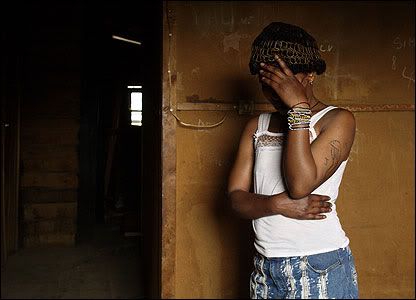 When one first looks at the photo, the girl immediately stands out, which plays an important role in the argument of the photo.