Monday, April 26, 2010

WP3: Final Draft

Authors Note:

This was a particularly unique assignment as it was rhetorically multidimensional. Besides simply thinking about the various elements involved when writing a rhetorical analysis, I also had to keep in mind that this was in the form of a letter that would ultimately be performed in front of an audience. This became important, as I had to specifically keep in mind my primary audience: the inanimate sculpture, as well as the secondary audience: my classmates, teacher, and other observers. In addition, I composed the letter to have a certain rhythm or feel when spoken aloud. Underlying each of these aspects, I utilized many of the rhetorical concepts learned previously in this class to form the content of the letter.

In looking rhetorically at Variable Wedge, I realize that each viewer perceives a slightly different argument from the sculpture, as it is subjective in nature. In this manner, I wanted to identify many of the main features embodied in the sculpture, which every observer would notice, and then depict why they are significant both to the piece and to me (when applicable). Furthermore, as I will be presenting this to an audience, I also employed the use of stepping-stones as an organizational device. When viewed from the West, the tops of the seven sections of the sculpture look like stepping stones progressing their way upward. Since this had a significant impact on how I viewed the piece, I felt it was fitting to use it as an organizational tool.

The general elements that I then incorporated into this seven-point argument include the form, materials, color, conflict and resolution of pattern, negative space, as well as environment (context) of the sculpture. I felt that these were important aspects to the overall design, and using logos/pathos, I described how they influenced my thought. In addition, there were several themes that I focused on throughout these seven points, the first of which centered around the second half of the sculpture’s title: a wedge. As humans, we have a tendency to see ourselves in other objects, and besides inventing the wedge as a tool, it encompasses many of our natural tendencies. As mentioned earlier, a wedge progresses through time, tapering or growing. Thus, I discussed through pathos and logos how we as humans relate to this wedge, via its general form, evolving materials, as well as progression of color.

The second major theme that is mentioned throughout the letter is that of variability. Being the other half of the sculpture’s title, this word signifies change and fluctuation, both of which are abundant throughout the sculpture. Found in the fluctuation of Variable’s form, materials, as well as environment, change is something that people relate to. Essentially, life is a series of changes over time. Whether these shifts are drastic or insignificant determine how we view them, which is similar to Variable’s changes as well. Together, the form and variability of the sculpture provide what is so unique about it: thus this is what I attempted to portray.

First Draft

Final Draft:

Dear Variable Wedge,

You change, shift, and fluctuate through the passing of time. Commencing on a linear path, your form growing all the while, you reach out toward the sky. On this series of steps, I hop into the abyss. While many simplify you into a simple tool: one of six elementary instruments conceived by man, in my eyes you serve a greater purpose. You hold, split, and lift time, all in the same moment, allowing me to view the depths of my life. Then, when it appears that I have figured you out, you vary yet again, showing me something new. Angle after angle, your panoramic nature brings new insight to my soul.
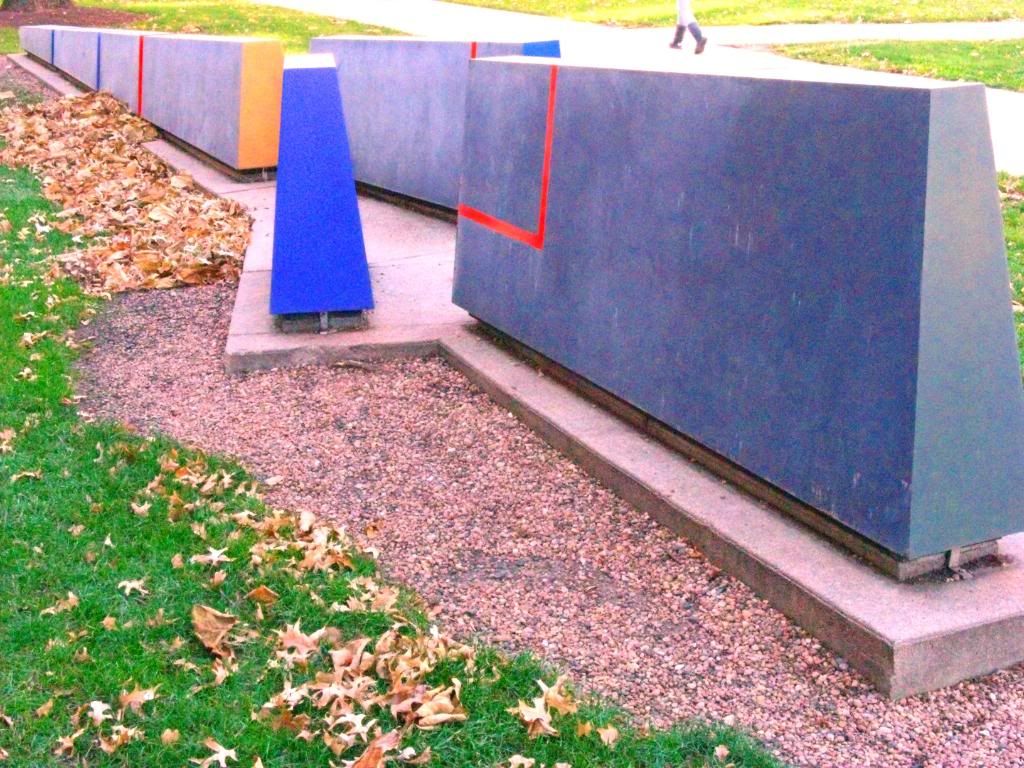
As with stepping-stones, you appear in a series of levels, each revealing bits of your character. As your first step, I notice your form: a wedge. Your positive mass takes up a slice of space in the continuous circle of time. Geometric and progressive, the fingerprint of mankind no doubt marks you. He has left you inorganic, in the shape of a tool. But perhaps you have left your mark on him as well. For, this evolution of a trapezoid reminds me of someone close, someone dear. At one point, a younger me, but upon further reflection, maybe my older self. At last, like your steps, I see continuous growth. Not only this, but a divergence from your initial path marks your maturation. Wandering left and then right, you are like my dreams: changing, shifting, fluctuating.

Evolving also are the materials you are made from. As a second stepping-stone, one observes your corten steel skin, which appears rigid yet vulnerable to the elements. Or is it? One may assume that you will eventually deteriorate into nothing as your surface rusts over time. Little do they know, however, that this process will only serve to strengthen you more. Your layer of rust becomes a skin of protection, chemically stable with the environment. It’s almost as if you wish to mirror our hearts and bodies. Appearing as hindrances, broken bones and wounds only serve to make us stronger.
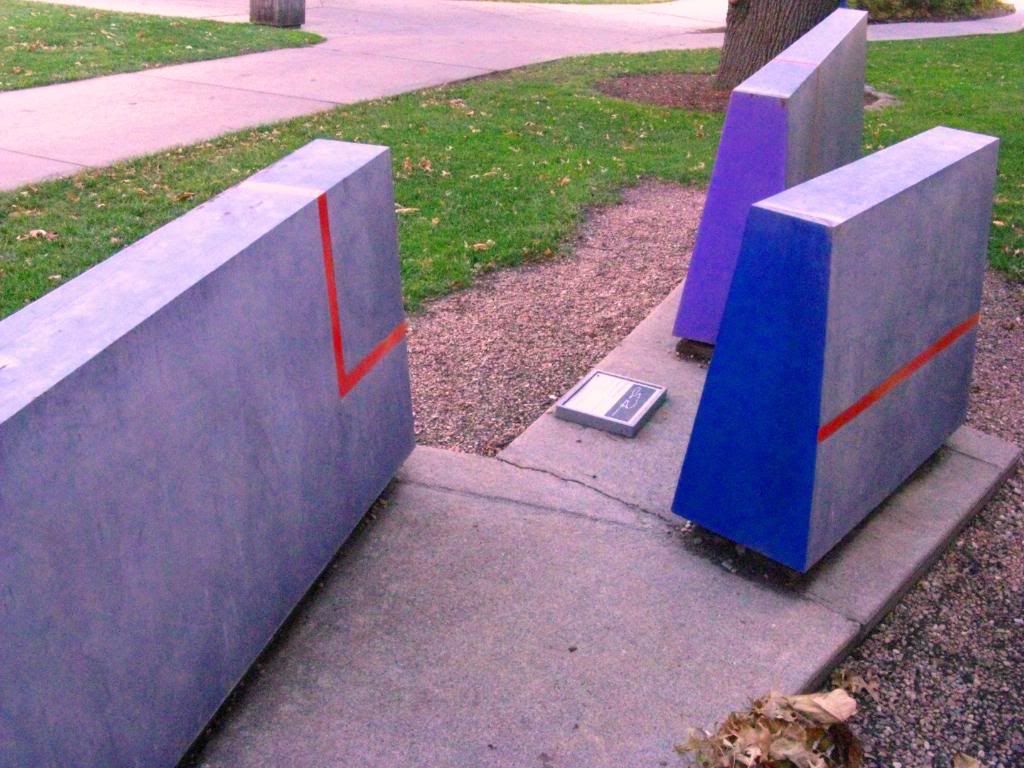
This brings me to your third stepping-stone, Variable Wedge: I can see your hues of experience progressing through the years. Visible but not overwhelming, these colors exist. Blue then violet. Red then yellow. As they progress, they become lighter in value. But does this build upon your previous concepts? Are the other stepping-stones related or independent? From small to large, dark to light, your form and color contain a pattern too coincidental to ignore. When I was a young boy, I was both small in stature and weak in knowledge. Like a small trapezoid in an exposed world, I was confused and uncomfortable. However, as both my strength and knowledge expanded, so did my comfort. From dark blue to a brighter yellow, I became more outgoing, mature, and bold in my actions.

Hold on a moment, though. From dark to light, your pattern holds strong. Why then, do you resort back to blue and violet while you are still growing? At this same juncture, your form expands. Moving left and then right, it sways back and forth. Now, my good friend Variable, I question what I have constructed. You have wedged this problem into my stream of consciousness: splitting and testing what I thought I knew. For when life is easy, and things are going as planned, confidence is gained and boldness harvested. Ultimately, though, as you break your norms, conflict seizes this comfort. Inevitably, youthful feelings of inexperience emerge once again, regressing your emotions to a previous state. Combining the bright hues of your previous knowledge and experience, however, you piece yourself together. In this entire process you also gain knowledge about yourself, as well as the meaning of an orange rectangle and color regression on a sculpture.

This conflict and resolution were the fourth and fifth steps; they added much to your emerging character. And with these additions, I thought our relationship had been discovered. As is evidenced by many things in this world, however, your being is more complex than simply the obvious. Just as a wedge has many uses and is constantly changing, so too are your defining elements. While your positive form occupies a slice of space and contains billions of molecules, it fails to occupy even a fraction of the universe. Surrounding you are, thus, an infinite number of other variables, each of which contribute to your ever-changing being. Just as they interact with the wavelengths of your colors and the toughness of your skin, they also define the edges of your form. As steel turns to air, air tapers to steel, positive and negative wedges interact.

These other forms of wedges exist and become the sixth stone to step on, further establishing your character. The negative spaces between your sections juxtapose the finite and definable qualities of your positive form. These are your wedges that are truly variable, constantly changing. In one moment, an insect dissects this space, while in the next it is filled with the decomposition of leaves. I believe this is one of the more complicated aspects of you, Variable, and I don’t intend to pretend I know everything about it.

In continuing with this theme, the seventh and final stone forming your character is not about you, but about your environment. Essential to any being are their orientation among their surrounding elements. In your case, there are two buildings that run parallel to your body, representing professional occupations. In music and architecture, change is necessary, as originality is key. Even broader than this is the fact that you are on a university campus: a place where dreams are formed, futures molded. Variability is synonymous with this collegiate atmosphere, as students’ lives are constantly shifting. From a change in major, to a flux in ones beliefs, it is a time of self-identification. In this way, your physical features are defined more by these facts than by their own mass.
As we have spent these past weeks together, Variable, each of your encompassing elements has suggested much to me. Your form, material, and color provided a base, while the conflict and resolution of pattern pushed my thinking. Then I realized the impact of the negative space and environment on your story. They build upon one another, adding layers of insight reaching to the heavens. However, as I have identified these seven areas, I realize that I have only scratched the surface of your variability. As such, I wish only to imitate you for a moment, starting at the beginning of your path upwards. Perhaps I will gain more of your wisdom this way.

Sincerely,

Joey Laughlin


Thursday, April 22, 2010

WP3: Rough Draft

Dear Variable Wedge,

You change, shift, and fluctuate through the passing of time. Commencing on a linear path, your form growing all the while, you reach out towards the sky. On this series of steps, I hop into the abyss. While many simplify you into a simple tool: one of six elementary instruments conceived by man, you serve a greater purpose than that in my eyes. You hold, split, and lift time: all at the same moment, allowing me to view the depths of my life. Then, when it appears that I have figured you out, you vary yet again, showing me something new. Angle after angle, your panoramic nature brings new insight to my soul.

As with stepping-stones, each builds off of the last, with the most important information residing in the first step. As your first step, I notice your form: a wedge. Your positive mass takes up a slice of space in the continuous circle of time. Geometric and progressive: you are no doubt marked by the fingerprint of mankind. He has left you inorganic, in the shape of a tool. But perhaps you have left your mark on him as well. For, this evolution of a trapezoid reminds me of someone close, someone dear. At one point, a younger me, but upon further reflection, maybe my older self. Alas, like your steps I see continuous growth. A tool you are: with the ability to peer into the depths of my heart. At first my dreams appear linear, but then again, they are in a constant state of variability as well. Changing, shifting and fluctuating.

Evolving too is the material you are made from. As a second stepping-stone, your cor-ten steel skin is rigid, yet vulnerable to the elements. Or is it? While it appears to age over time, polished to rust, one assumes that you will eventually become too weak to hold yourself up. Surprise them you will, however, as this aging serves only to strengthen you more. For with time and rust comes a more stable chemistry. As with life, we bleed and scar from wounds, hurt from broken bones. However, upon reconstruction, these bones and scars only serve to make us stronger.

This brings me to your third stepping stone, Variable Wedge; which is not separated much from the first two. I can see your hues of experience progressing through the years. Visible but not overwhelming, these colors exist. Blue then violet. Red then yellow. As they progress, they become lighter in value. But does this build upon the concepts of the first step? Do these separate aspects mesh together, or are they unrelated? From small to large, dark to light, you contain a pattern too coincidental for me to ignore. Thus, as you pose the question as to what the colors of your core being represent, I give you my answer. For when I was a young boy, I was both small in stature and weak in knowledge, as though I was a small trapezoid, somewhat confused and uncomfortable when exposed to the elements of the world. However, as both my strength and knowledge grew, so did my comfort level. From dark blue to a brighter yellow hue, I became more outgoing, mature, and bold with my actions.

Hold on a moment, though. From dark to light, your pattern holds strong. Why then, do you resort back to blue and violet while you are still growing? Left and then right, your form sways back and forth: diverging once again from the norm you have followed. Now, my good friend Variable, I question what I have constructed in this moment. You have wedged this problem into my stream of consciousness, splitting and testing what I thought I knew. For when life is easy, and things are going as planned, confidence is gained and boldness harvested. Ultimately, however, something knocks you down as you stray from what you were comfortable with. Inevitably, feelings of your inexperienced youth emerge once again, a sort of regression. Eventually, however, you proceed onwards, gaining confidence and maturing once again. In the process you also gain knowledge about yourself, as well as what the regression of blue and violet hues on a sculpture mean.

This conflict and resolution were the fourth and fifth stepping-stones, adding to your character. And with these additions, I thought I had finally figured out our relationship. As is evidenced by many things in this world, however, your being is much more complex than simply your obvious features. As a wedge has many uses and is constantly changing, so too are the elements that define you. While your positive form occupies a slice of space and contains billions of molecules, it does not even occupy a billionth of a fraction of the universe. Surrounding you are, thus, an infinite number of other variables, each of which contribute to your ever-changing being. While they serve to define the edges and elements of your form, they also interact with the wavelengths of your colors, and the toughness of your skin. After each of these copious variables has taken its effect in a moment in time, your being is essentially calculated, as is mine as well as everyone else’s. With each of your passing sections, steel turns to air, and air tapers to steel: positive and negative wedge interacting and interlocking, providing a visual sense of what you are.

These other forms of wedges exist in a manner in which they become the sixth stone to step on, further establishing your character. The negative space between your various sections juxtaposes the finite and definable qualities of your positive form. These are your wedges that are truly variable, constantly changing. At one moment, an insect dissects this space, while in the next it is filled with decomposing leaves from trees. I believe this is one of the more complicated aspects of you, Variable, and I don’t intend to pretend I know everything about it.

In continuing with this sort of thought, the seventh stone is more about the space that surrounds you. Essential to any being are their orientation among the elements in their environment. In your case, there are two buildings that run parallel to your body, which in turn represent professional occupations: those of a musician and an architect. Even broader than this is the fact that you are on a university campus: a place where dreams are formed, and futures molded. Variability is synonymous with this collegiate atmosphere, as students’ lives are constantly shifting. From a change in major, to a flux in ones beliefs, it is a time of self-identification. Also important is your orientation in such a way that you grow as you make your way Eastward. I believe that you hint that one way we grow is to reconnect with our innermost being, which is formed when we were little. Reconnecting with our roots is one way that students mature.

As we have spent these past weeks together, Variable, each of your encompassing elements has suggested much to me. Your form, material, color, conflict and resolution of pattern, negative space, and environment each play a role in your story. They build upon one another, adding layers of insight reaching to the heavens. So just as you will continue to change, shift, and fluctuate, I have realized that we are similar in that regard. For now, however, I wish to become part of your variability; for this is our common thread.

Thanks so much,

Joey Laughlin


Monday, April 19, 2010

WP3: Statement of Purpose

One type of communication is through the creation of art such as a sculpture. This being said, even though the artist may have the desire to convey a particular message during his/her design process, once completed, the work itself manifests its own message and meaning to each individual viewer. Keeping this in mind, the elements of each sculpture that identify with each individual may vary from what the sculptor originally intended. Thus, after spending hundreds of minutes studying the piece Variable Wedge by Sam Richardson on the UNL campus, I have come to a particular realization about what the piece means to me. In doing so, however, it would not be particularly meaningful to discuss what I have learned with Richardson, as he may or may not have designed the piece with the purpose that I believe it has. Instead, I should convey this message, in the form of a letter, to the sculpture itself.

As I attempt to convey my message to Variable Wedge, it is important to keep in mind three particular aspects vital to the success of the letter: the audience, the context of the message, as well as my purpose. Perhaps the most unusual part about this endeavor is that it does not involve a typical audience. Although a sculpture is able to communicate with people via its subject matter, form, and syntax, it is not able to respond verbally to a letter. Thus, whereas one might normally write a letter with the purpose to hear back from the primary audience, this letter will not be in that format. Instead, it will be as if I am speaking to someone who is unable to communicate back to me either verbally or with motion. In addition, I must also keep in mind the secondary audience, which consists of my class, teacher, and other people who might walk by as I read the letter aloud. Many of these people most likely have not looked closely at Variable Wedge before, and as such, it is important to take this into consideration when formatting the note.

Besides audience, it is just as important to consider the context in which the message will be presented. As a sort of theatrical performance designed to convey my message to its primary and secondary audiences, I must write the letter in such a manner as to engage both audiences. This context necessitates the use of colorful adjectives as well as having the mindset of an actor when reading the letter aloud. In addition, the way in which I read the letter will also be crucial, as this iteration mirrors the form and function of the sculpture. The environment in which I read, the outdoors, will also require that I project my voice so it can be heard by all members of the audience.

Lastly, as I take the audience and context into consideration, I can finally take into account the two-fold purpose of the letter. First and foremost, it will be to dictate to the steel wedge what I have gained from his form, color, textures, orientation, etc. There are countless aspects of the sculpture to address, and as such, it is important that I condense what I want to say into a concise yet precise letter. The second aspect of this purpose involves engaging with the secondary audience in a way that incorporates them into the situation as well. Hopefully through the letter they will be able to identify with the sculpture as I do.

Sunday, April 18, 2010

WP3: Fourth Post

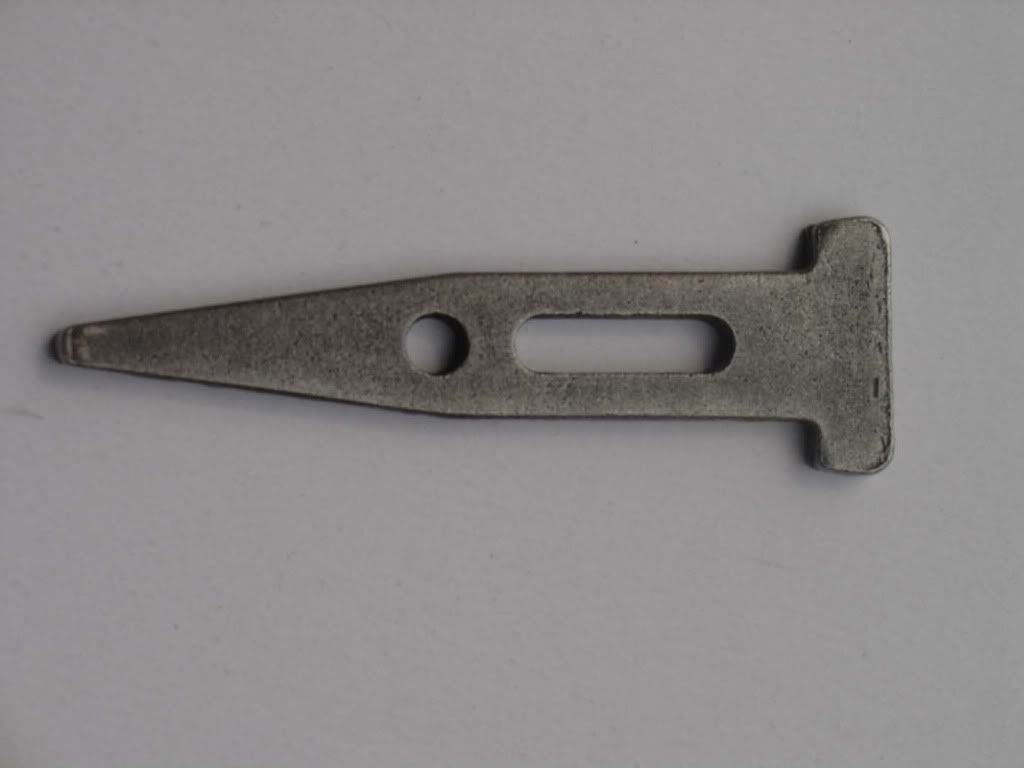
As is obvious when looking at the sculpture located between Architecture Hall and the Westbrook Music Building, the name Variable Wedge suits the form of the object. A device that tapers from one edge to the other, a wedge can be used to hold objects in place, split an object apart, or lift an object up. Thus, there are many different contexts that the variable wedge could be placed in. The wedge is one of the earliest tools developed by man, and so in creating this particular model of the tool, Sam Richardson might be trying to tell us something about our primitive beings in respect to the modern, man-made world (as evidenced by the geometric shape).

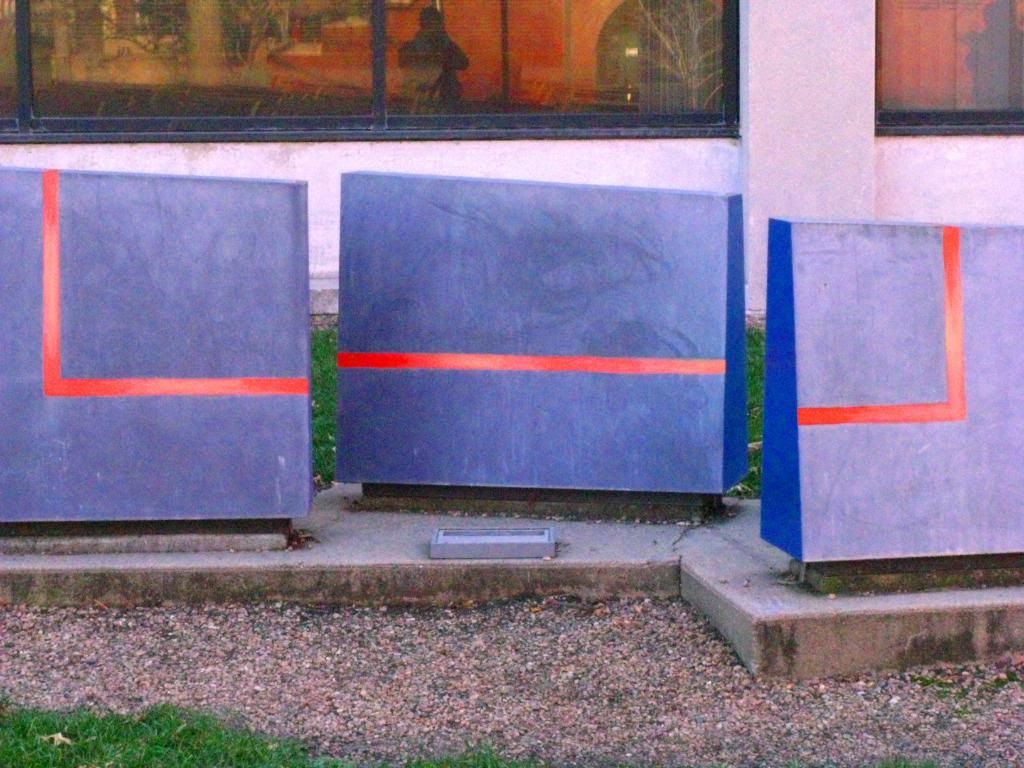
Although the sculpture itself may at first appear to be this long wedge split into seven sections, acting like a door-stop in time, the name might also be referring to each individual section in its own right. In addition, if one looks even closer, the name could also be referring to the negative space that exists in-between the various sections, as these are angular wedges as well.

In looking at the history of the wedge, the time when it was first used or incorporated into society is largely unknown. Archeologists have uncovered evidence, however, that points to the Egyptians using bronze wedges to sculpt and break away stone when they constructed. In this way, used as a device during the construction and manipulation of materials, it is fitting that Richardson chose to orient this steel piece in between Architecture Hall and the Westbrook Music Building. Of course it is somewhat obvious that a wedge could directly be associated with the function of architects in society, as they design and manipulate materials as well in order to create the structures in which we live. Musicians too, however, manipulate waves of sound so that they resound in us, bringing forth various feelings in our soul.

Wednesday, April 14, 2010

WP3: Third Post

Upon further reflection of Variable Wedge by Sam Richardson, there are other aspects of the sculpture that are necessary to look at when analyzing its rhetorical value. Building upon the materials used, as briefly mentioned in the previous post, the sculpture is not only made out of Cor-Ten Steel, but this steel is then situated on top of a cement foundation beneath it. In this way, not only does the steel have a strong and sturdy structure, but the concrete only further solidifies this form. This rigid, geometric figure produces a stable reaction to the viewer, as if the form is where it is supposedItalic to be, and not moving from that state. Despite this, there is a definite narrative in the progression of the wedge, which sort of juxtaposes this stationary feeling, and provides some movement for the sculpture.
As far as the other chemical and visual properties of these two materials, Cor-Ten steel is meant to weather from its original state, while concrete remains relatively the same except for cracking due to shifts in the ground. With the steel, a chemical, corrosive process produces a protective layer of rust on the outside when exposed to outdoor elements over time. This is particularly interesting, as this changes the color of the sculpture, with the exception of the sides painted with the bright hues. Visually, it is somewhat obvious that the appearance of Variable Wedge will change over time due to this chemical change, especially its color. In addition, however, its form will shift slightly as well. When the Wedge was first created and assembled in its current location, one can assume that great care was taken to situate it in a manner parallel to Westbrook Music Building, but also to place each section of the wedge in-line with the other sections. Although this linear progression is still a major effect conveyed to the viewer, when one views the sculpture from the West, it is obvious that the first four sections have shifted slightly. In this manner, there are slight discrepancies between these sections, which I would imagine Richardson would have thought about when he created Wedge. Rhetorically, this can be conveyed through a logos lens as pertaining to the variance experienced in one's life: areas of tension, etc.
Lastly, when talking about the positioning of the entire piece, especially when viewed from the West looking East, one notices how the form of the sculpture points out into space. The tops of each of the sections extend upwards, so that since the piece is located on a hill, it gives the viewer a feeling that they are being shot up into the sky. When applied to this theme of life that the sculpture insinuates, this gesture is quite fitting, as it implies setting high goals for ones self. "If you shoot for the moon, you will land among the stars."

Thursday, April 8, 2010

WP3: Second Post


In looking at the sculpture Variable Wedge by Sam Richardson, there are many rhetorical techniques, strategies, and concepts utilized to make certain appeals to its audience. When one first observes the sculpture, the first thing that the eye notices is the form of the "wedge," and how the title plays into this form. The sculpture consists of seven separate sections of a wedge, or triangular-shaped form as viewed from the side, which has the cross section of a regular trapezoid. When viewed from the side (North or South views), it appears as a complete wedge. When looked at from any other view, however, one notices that the fifth and sixth sections within this wedge sort of branch out from the linear pattern established within the first four sections. The fifth is rotated so that it is branches out toward the North, while the sixth one branches out toward the South. Finally, then, the seventh section is oriented in-line with the first four sections, as it is back on track. This form, whose title makes sense with the orientation of the piece, begins to possibly establish a narrative for the entire sculpture, one of progression from small to large through time: possibly even growth. The trapezoidal cross-section, however, as well as the geometric shape appeal to logos, as it is a stable form, with a large base.

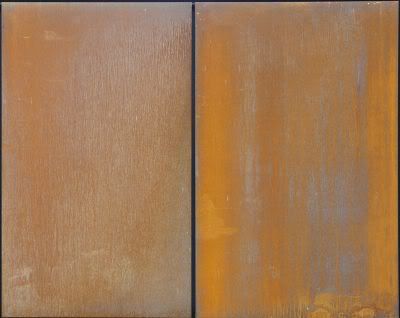
The second element about the sculpture that is hard to miss are the elements of color located on the sides of the slices: as if someone had taken a saw colored with paint and cut the big wedge up into smaller pieces. These hues make an appeal to pathos, as they are vibrant colors: relatively bright with a lot of saturation. These possibly refer to the core or inner values within people, which can especially be seen when people stray off of the normal path. Due to their vibrant nature, these colors emit a sense of energy to them, especially since they are juxtaposed with the cool gray that engulfs the outside surface of the sculpture. The material also becomes important, as the piece of art is composed of Cor-Ten Steel, which is smooth, but geometric looking. The fact that the sculpture is located outside adds to this effect, as the gray surfaces are noticeably weathered, with rust forming on them. These colored sections are not, however, which makes them all the more vibrant in comparison.

The last element that is extremely noteworthy, especially considering Sam Richardson's background with landscaping elements, is the environment in which the sculpture is located. Situated in a position parallel and in between the Westbrook Music Building and Architecture Hall, the sculpture seems to discuss the subjects of these two buildings. The form of the wedge seems to depict a progression through life, addressing how professionals such as musicians and architects sometimes need to branch off from the main road in order to show their talents, or colors.

Wednesday, April 7, 2010

WP3: First Post

In the past, I have had some experiences with art objects, and am familiar with a few of the processes used to make art. Ever since I was a youngster, I have had an unconscious fascination with art, and have always enjoyed creating things. Thus, all the way up through middle school, I thoroughly enjoyed the art classes I took. Furthermore, although my schedule in high school didn't allow me to take such courses, I continued to occasionally paint and draw on my on time. Currently, as an architecture student, I am required to take the visual literacy courses, such as drawing and painting classes, in which I have learned how to better create such art. In addition, classes such as Analysis and Composition have allowed me to better understand the form of certain pieces of art using tension, balance, hierarchy, etc.

Besides making some of my own pictures and paintings, I have also had experiences with pieces of art such as paintings, drawings, sculptures, and other instillations by visiting various art museums throughout my life. Besides annually venturing to the Joslyn Art Museum in Omaha, I have experienced art museums in Kansas City, St. Louis, Phoenix, Chicago, and even the Prado in Spain. Some of the works of art that I have found the most fascinating have been mobiles, such as one done by Calder at Joslyn, as well as other three-dimensional, kinetic sculptures. These works in particular have the ability to make you wonder how they work, or sometimes what they even represent. In looking at these various works of art, however, I have not spent more than a maximum of 15 minutes analyzing or looking at any single piece at a time; it is a typical look, think, and move on.

Another form of an art object that I enjoy is architecture. From Taliesin, which is Frank Lloyd Wright's home in Wisconsin, to the ancient castles in Seville, Spain, I am fascinated by the way in which buildings are designed. Furthermore, the way in which they fit into their respective environments is something that can inform the reader about the subject. In a similar manner, I believe that the way in which sculpture is situated and located among its surrounding elements contributes vastly to its meaning.

Tuesday, April 6, 2010

WP2: Final Comic

Author's Note

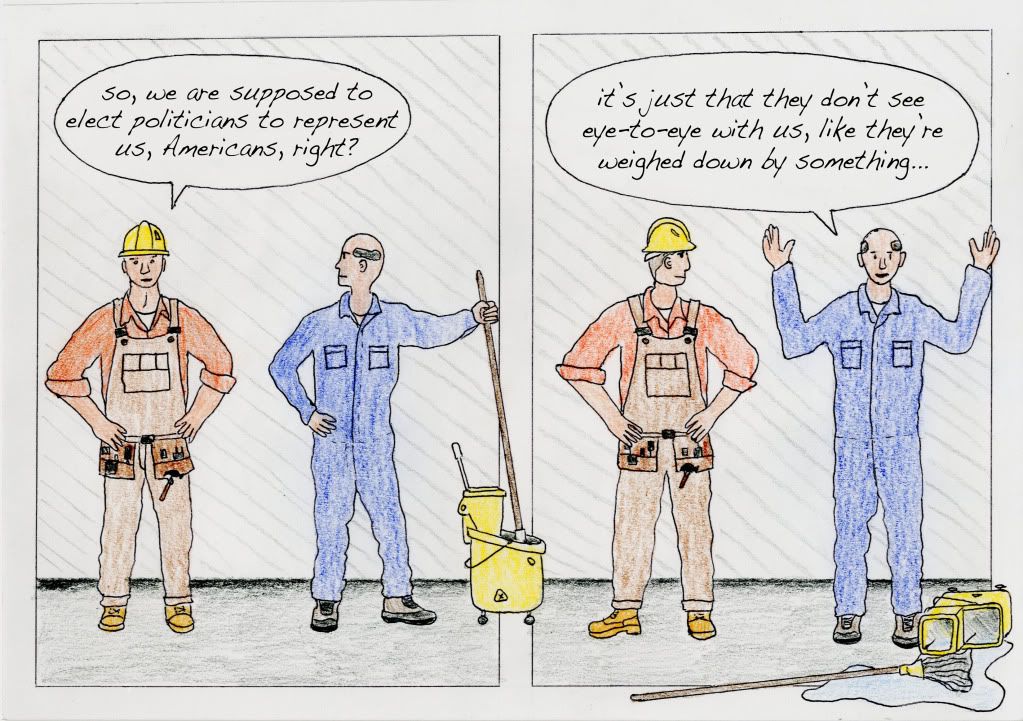
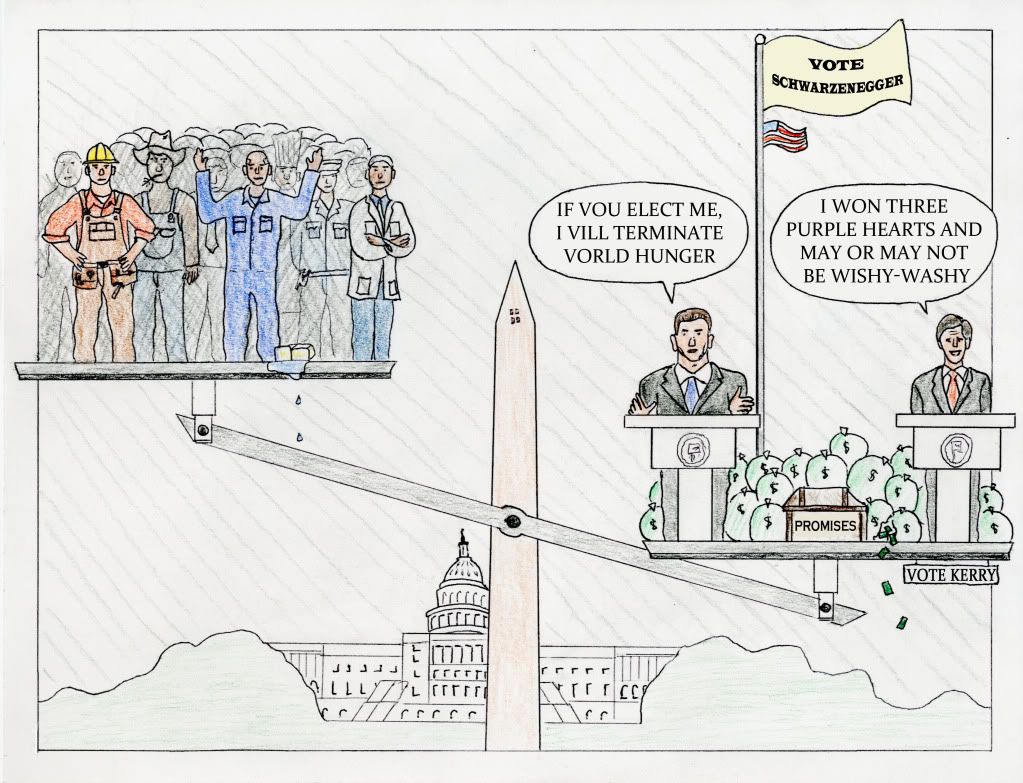
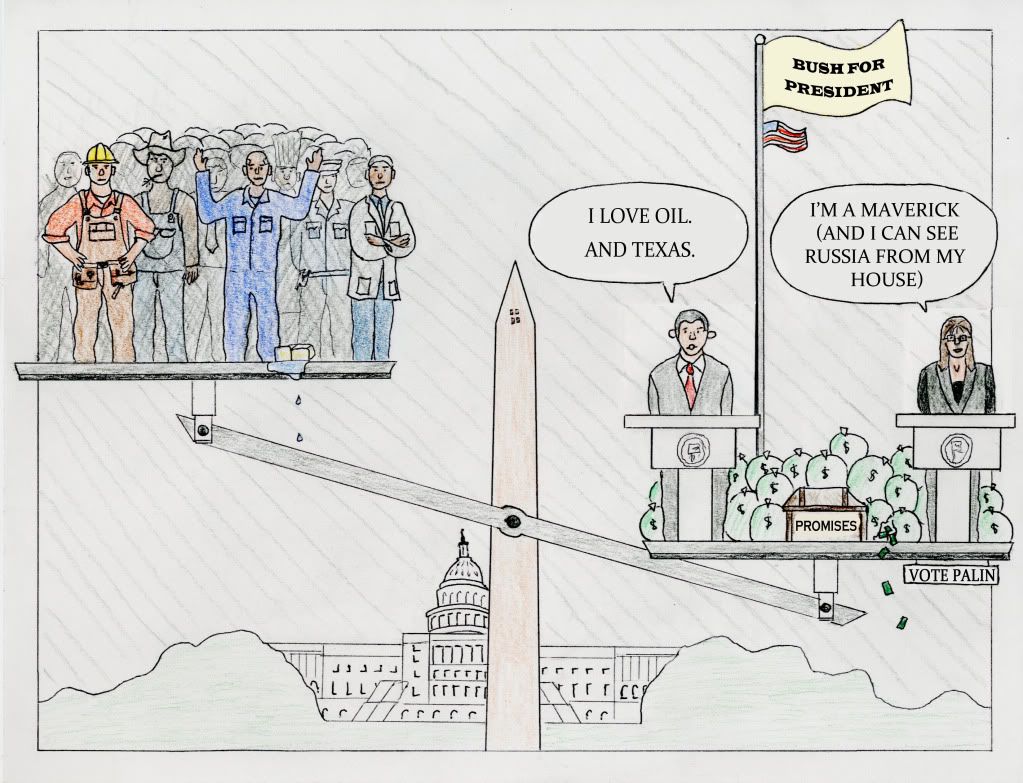
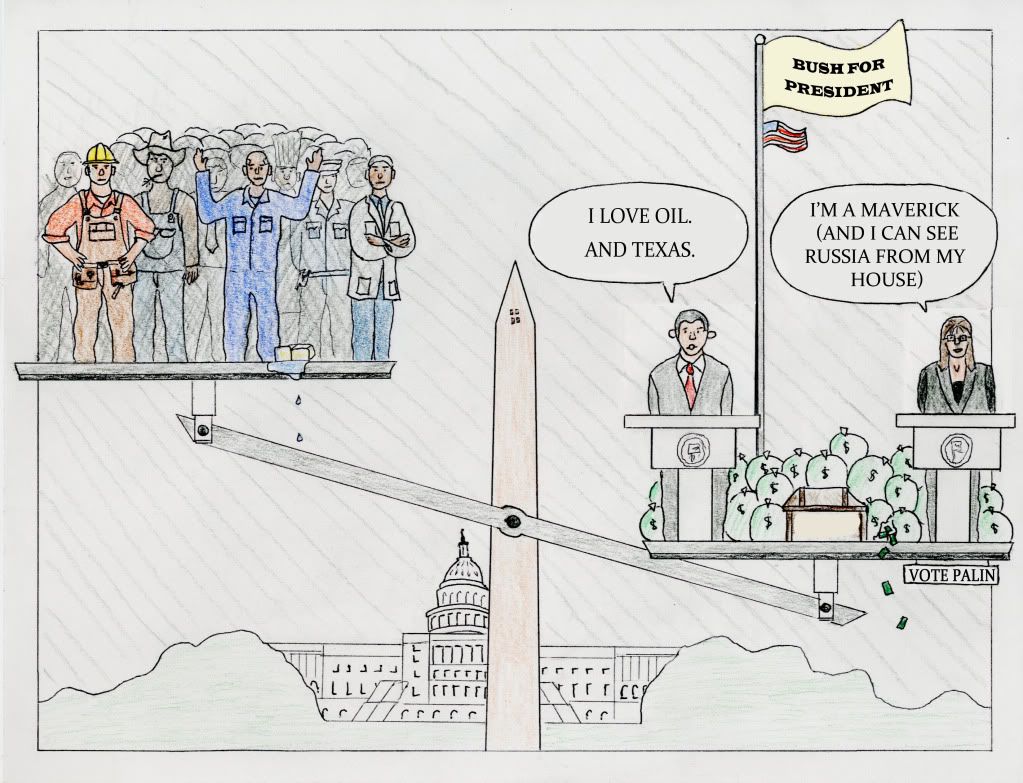
The central theme surrounding my comic, as mentioned in the statement of purpose, is that politicians live in a different world than the average American. As demonstrated through their financial status, fame and fortune, as well as political agendas, the lifestyle of a politician often juxtaposes that of the public, and prompts the questioning of their true representation of the people. Communicating this message to my audience via a comic was no easy task, and it involved an ongoing editing process, working with aesthetic and structural elements.

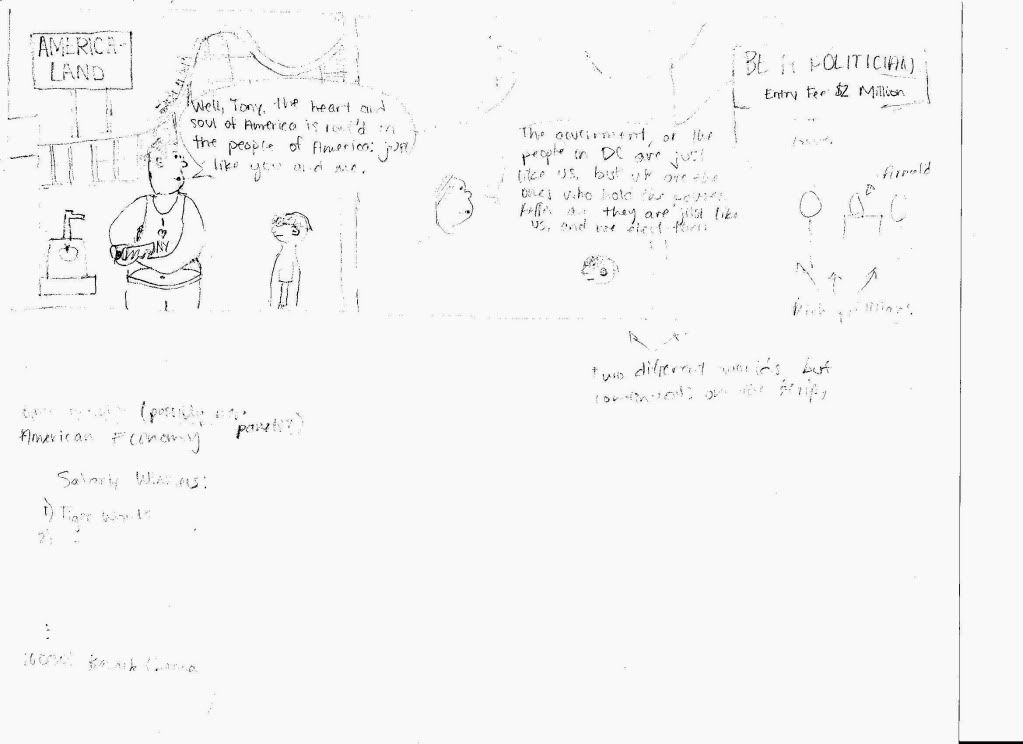
When I originally decided to focus on the differences between politicians and citizens, I foresaw the use of an amusement park with a “political entry booth” as an icon to emphasize the money needed to back a campaign. However, this did not depict some of the other points I wanted to make, and so I decided to use a balance to compare the two groups. Furthermore, in choosing specific iconic people to represent Americans and politicians, I was forced to make decisions regarding who to draw. As pertaining to the citizens, I chose to incorporate many recognizable “blue collar” jobs such as a construction worker, janitor, farmer, etc, while I selected several well-known political candidates for the politicians (from both parties).

In addition, I wanted to add some humor to the message, which is why I included the satirical phrases spoken by the politicians. Although made popular by shows such as SNL, these phrases address some of the same disparity between politicians and the public that I wanted to tackle. Lastly, I had to make aesthetic decisions regarding the typography of the comic. Initially, I hand-wrote the dialect, but eventually decided to use word-processed type for consistency and a professional look. In this way, I was also able to change the fonts between panels: using a lower-case, handwritten font for the everyday workers, versus an uppercase, “professional” font for the politicians.

Also key to this process were the use of rhetorical concepts with which to base aesthetic choices off of. One example of this is that it is especially important within a comic genre to establish a particular pathos and ethos with the audience so that they are able to personally identify with the message. Unlike essays and other such medium, icons in comics can be drawn with varying levels of abstraction. In this way, as stated by McCloud, there exists “amplification through simplification.” Thus, because I wanted the reader to be able to identify with the Americans in the composition, I abstracted these people so that their faces contained few details. In this way, the reader is still able to classify their occupations and what they represent, but also identify with them. The politicians, however, are abstracted much less, so that they are more objective and recognizable.

Another rhetorical concept that is important within the framework of a comic is using icons and symbols to represent various ideas. The main icon I chose to use was the scale, which essentially compares two different groups of people: U.S. citizens versus U.S. politicians. In this manner, I was able to depict using the symbols how the politicians are generally different from everyday citizens. In addition, I juxtaposed the symbolic falling dollar bills with the spilled mop water to further compare these two groups of people. On a larger scale, I chose to incorporate the Washington Monument and Capital building to address through logos what is affected by this conflict.

Lastly, in order to make the comic unique, I tried to break away from some of the norms associated with that medium. One such decision, which engages the audience, is to sever the frame of the various panels with the subject matter. By intersecting the frames with the mop bucket and scale, the audience’s attention is called to this subject matter, making them think about what the objects represent and how they fit into the comic. In addition, because the comic is published on a blog, I thought about how I could utilize that context to further break some of the other norms. Thus, creating an “alternate ending,” was a structural choice that allowed me to add another dimension to the comic.

Statement of Purpose


Alternate Ending


Saturday, March 27, 2010

WP2: Statement of Purpose

Among the many types of medium used to convey arguments, the comic is one that has different abilities than other typical formats. While it has the ability to address difficult subjects in a personable manner to the audience, this medium also requires the use of many rhetorical devices as well. In order to be effective, the author must consider the purpose, audience, and context of the message, among other things. Thus, in creating a comic, my purpose is to largely apply the rhetorical concepts used in the medium of comics to convey a message to my audience. More specifically, this message is mainly that politicians in the U.S. are not true representatives of citizens, as they are extremely wealthy, which possibly skews their view on various issues.

Besides looking at the purpose, paying attention to the particular audience and context of the comic are also crucial when making decisions throughout the illustration process. The primary audience of my particular comic is my professor, as he will be the one reading and grading the comic. The secondary audience, however, includes my classmates and other people who stumble across it. This being said, the context of the comic is that it is published on the internet via a blogpost. Noting this can help further refine the primary level of audience, as anyone with the internet could potentially view the comic. These individuals might possibly be looking to gain a particular insight, or a laugh from the comic’s message. The fact that this audience consists of primarily educated older people is important in that its political message would be difficult for a child to understand. Moreover, the various modes of appeal used for this particular audience need to be considered throughout its construction.

One mode of appeal that is essential in the comic is logos, as logic plays a huge roll in the particular message I am trying to illustrate. Essentially I demonstrate that political representatives need to be extremely wealthy people in order to fund successful campaigns, etc. In looking at the resulting disparity between wealth of representatives and the bank accounts of average Americans, this sheds light as to the gap between governmental interests and those of the general population. Thus, the text and storyline of the comic need to clearly convey this logical message through the use of a narrative, analogies, etc. In addition, the selection of a particular typography as well as considering the framing, or the way in which the particular panels are read, can also add to the clarity of logic.

Another mode of appeal important to the argument is the pathos generated in the comic. The emotion and general feeling of the audience helps to convey the message in as personable way as possible, so that it connects with each individual. One unique method of doing this in comics is by varying the level of abstraction of the characters. Generally the audience can identify more closely with a less detailed character than a realistic figure, and so using the correct level of will help the audience identify with certain characters (specifically the blue-collar ones). In addition, applying specific hues in various locations of the comic also have the ability to draw attention to particular aspects of the message, as well as convey a particular pathos to the audience. In my particular situation, I might want to add color to the blue-collar workers, so that the audience notices this color and relates with them. These aspects are all important in creating a comic, and if I consider them, my message will most likely be clearer and more effective.

Sunday, March 21, 2010

WP2: Second Post

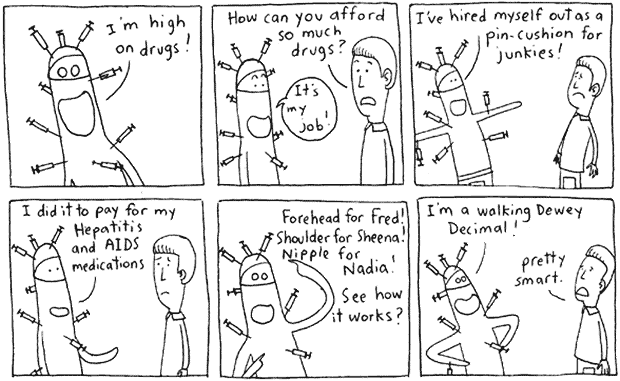
There are two historical points that need to be considered when looking at the comic, the first of which is the history of the comic itself. What is the purpose of the comic strip, and what topics are frequently addressed by the author? This comic in particular is entitled White Ninja's New Low, with the series having the name White Ninja Comics. Published online as a webcomic, every issue features a nameless white ninja who performs activities ranging from far-fetched to mundane. Furthermore, each publication is self-standing, or not linked to previous issues, and the humor is typically non-sequitur.

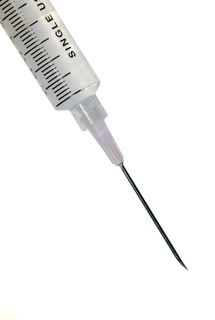
The second point that needs to be evaluated is the particular historical context of the subject matter (drug addiction; specifically drugs via injections). Drugs themselves have been around since early BC, and can either be inhaled, injected, or absorbed in other ways. According to drug-rehabs.org, alcohol and narcotics such as marijuana have been used since 4000 BC, but it was not until the late 18th century, that the hypodermic needle was invented. Currently, the drugs are consumed around the world, with people injecting various substances in their bodies to "get high." In particular, however, the use of drugs is and has been prevalent primarily in Europe, North America, and Asia.

After looking at this background information, one can further understand and analyze the message being portrayed in the comic White Ninja's New Low. Whereas before I didn't know what or who the blob-shaped character was, I now know that he is the main character in the series: he is the White Ninja. Furthermore, I can see that these six panels do not rely on previous information from an earlier publication. The point about the Dewey Decimal makes little sense, but it is not supposed to, since it is part of the non sequitur humor. In addition, this comic is about drugs and the vicious drug cycle, and knowing background information on this problem, is important as well. The fact that drugs are used on a global scale, for instance, can increase the significance of this subject matter. Due to the fact that both characters are speaking English, however, one can conclude that the comic is directed towards a more Western audience.

A comic strip is an unusual medium in that it has the capability to convey a more serious message in a more relaxed manner than other types of communication. Since drug use may be a touchy subject, readers may be more likely to read and think about the message in the form of a comic rather than an essay. If so, this, in turn, may lead to a more effective means of portraying the message to this audience. Furthermore, the comic medium reaches a variety of ages, as not only does it appeal to adults but to some teens as well.

Works Cited

Hoge, Warren. "The New York Times Log In." The New York Times - Breaking News, World News & Multimedia. 25 June 2007. Web. 22 Mar. 2010. {http://www.nytimes.com/2007/06/26/world/asia/26nations.html}.

Wednesday, March 10, 2010

WP2: First Post


Entitled New Low, this comic can be viewed on the white ninja comic website. Although it is somewhat different from the typical Sunday-paper comic, this series of panels uses many of the rhetorical concepts and techniques as defined in chapter 15 of CDA, as well as in Scott McCloud's book The Vocabulary of Comics. The general theme within this particular comic appears to be people who do things for others without even thinking about the implications of these actions. Specifically, it uses drugs and "druggies" as an extension for this message. It also briefly mentions how this type of lifestyle is one of a circular path, with one bad thing leading to another.

The first and most basic device used within the panels is the simplicity with which the characters are drawn. As McCloud mentions within his Vocabulary of Comics, the primary reason that people connect with the various symbols and messages within comics is that they are simple enough so that people can relate with them, or apply them to their own life. If there were too many details to make the pictures seem more realistic, then people would not be able to associate themselves as closely with certain figures. In fact, while the guy on the right is simply a stick figure with definition, the guy on the left hardly resembles anyone. Thus, from the reader's experience, he/she can mentally relate a person they know with one of these characters. In addition, the more relaxed atmosphere allows the author to approach the serious subject of drugs to a wider range of audience. As I am planning on writing/drawing my own comic for this assignment, I hope to employ this simplistic effect in my work as well. Instead of using lots of detail to make the message applicable to a specific audience, I plan to expand this audience by being less specific/detailed. In addition, the use of simple symbols in my comic, such as the syringes in this one, allow for further connection.

Another device that is used within the comic strip is the implementation of a specific typeface: script. As defined in CDA's chapter 9, "typography is the study of how lettershapes-on paper or on screen-work functionally and rhetorically." In using a script letter-type, or one that looks as though it is handwritten, the author gives the viewer some information regarding the types of characters in the story. In this instance, the letters look like they were written somewhat sloppily, and thus communicate a certain unprofessional or relaxed atmosphere to the reader. Coupled with the theme of drugs within the comic, as well as the body form of the character on the left, this style of communication relates to the message being portrayed. As I am thinking about doing a comic that discusses a more serious subject such as trash, recycling, and the environment, I will have to think about using a more "creditable" typeface, such as sans serif.

Sunday, March 7, 2010

WP1: Final Draft

Author's Note:

In writing this first essay regarding the global argument behind the photo Very Bad, I learned how to deconstruct the elements of a photo and then depict the argument based on those elements. Throughout this process, however, there were many challenges that I had to overcome, the first of which was actually depicting the argument of the photo. I originally thought the argument was that the woman had been raped, as shown by her gestures. I soon found out through class discussions, however, that an argument is much more in-depth than simply inferring observations from the photo. By deconstructing the elements of the photo via pathos and logos, I was able to see that, in the context of a westerner looking at the photo, it evoked a sense of sympathy, thus provoking a desire to aid these people.

Another difficulty that I had was figuring out which elements of the photo would best support my argument. Vectors of attention immediately stood out, as the woman conveys much emotion through her gestures. Beyond that, however, I had to pick apart the rest of the photo to see that the framing/cropping isolated the few elements within the image, supporting the argument. In addition, I found out that the coloration, or contrast of the dark hues of the background and the bright hues of the clothing, also emphasized the woman. Thus, framing and coloration became my other key points adding to the argument.

As far as global revisions, besides adding bits and pieces to each of the key points over the course of the drafts, the most drastic change that I made was to rearrange these supporting points. In my first draft, the "statement of organization" looked as such, “Specifically, technical elements including vectors of attention, framing, as well as coloration function to forward this argument via appeals to pathos and logos.” However, due to the fact that the framing and coloration used logos in order to focus on the vector of attention, the woman, I switched the order of these supporting points to framing, coloration, and then vectors of attention.

Besides switching the key points, I also made a relatively drastic change to my introduction, as it was a bit lengthy in my first draft. Originally, I included much information regarding dates in the history of the Congo such as, “In 1997, the Mobutu regime, which was the empowered government in Congo, was overthrown with the support of Rwanda and Uganda.” I realized that this information was not salient to my argument, however, and so I replaced the irrelevant history with information on the photographer. In addition, I found that I had not addressed the “so what?” question in the conclusion, so I added several sentences such as, “Looking at this situation from a Western perspective, then, the issue goes beyond sympathy.” I believe that this concludes the essay more appropriately, and keeps the reader engaged until the end.

Final Draft:


Throughout history, the weapon of rape has often accompanied acts of war between different countries. Designed to humiliate and devastate communities, this weapon demonstrates power, supremacy, and dominance via the sexual violation of women. Perhaps the major reason for its effectiveness, however, is the fact that victims are typically silent and passive to the oppressor, as discussed in the above video, The Greatest Silence, Rape in the Congo. Besides negative physical effects, a loss of self-esteem contributes to a weak and dejected psyche in victims (RAINN). This state of depression, then, does nothing to prevent future attacks.

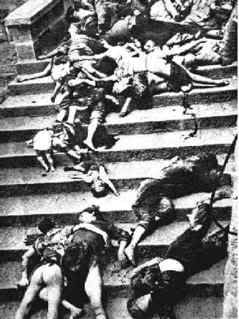
Although this weapon has existed since biblical times, there are a few major events in the modern era that have embodied the destruction of rape. The infamous Rape of Nanking in 1937 was one such incident that displayed the magnitude of destruction rape could have on a culture. During this particular massacre, an estimated 20-80,000 Chinese women were raped by invading Japanese solders: many of whom were physically beaten, sexually abused, and slaughtered. (BBC News…The Rape of Nanking)
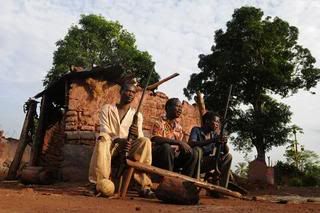
Perhaps the most recent and extensive use of rape, however, has been in the Democratic Republic of Congo, located in central Africa. Established in 1960, the country’s history has been characterized by political and social instability. (CIA World Factbook). In 2003, it finally looked as though peace had been reached, as a treaty was signed among neighboring countries. Unfortunately, however, this agreement had little effect, as acts of violence continued to mar the lives of natives. One of the biggest, but unseen, tragedies has been the raping of thousands of women by various military forces: both foreign and domestic. According to the video Congo: Rape as a Tool of War by the Washington Times, “Tens of thousands of women have been raped in Congo in the last ten years of civil war…[with] an average of 1,100 rape cases reported each month.” The video also says that rape is a weapon of choice because it is cheaper than using bullets, and it is guaranteed to keep a region submissive (Congo's Greatest Shame).

Besides looking at statistics, news reports have revealed the severity of the situation via other means. One photographer, Anna Kari, has taken photos in the Eastern provinces of Congo, depicting daily life in that area. She has published a series of photos of two women entitled Tales of Rape in DR Congo, which exemplify how rape has changed their lives. One such photo, entitled Very Bad, is about Aimerance, a seventeen year-old woman, who has been raped while serving time in the national army (BBC News: Photo Journal). This particular image illustrates the assistance and support needed by victims of rape in Congo to prevent further exploitation of natives. Specifically, technical elements including framing, coloration, and vectors of attention function to forward this argument via appeals to logos and pathos.


When one first looks at the photo, the woman immediately stands out, which plays an important role in the argument of the image. A powerful element that contributes to this focal point is the way in which the image is framed and cropped. By isolating the receding room, the wall, and the woman as the only elements in the picture, the photo presents a clear visual hierarchy. Thus, via logos, the image is better able to “shap[e] someone else’s attention,” meaning the viewer’s (Compose, Design, Advocate, 285). In other words, restricting the number of elements within the frame directs the reader’s attention to specific aspects of the photo. The pinnacle of this hierarchy includes the woman, as she is the closest in the foreground. This is important, as the viewer is then drawn to inspect her gestures more carefully to find a meaning to them.

In addition to framing, the alignment of these key elements also shapes how the reader perceives the photo. Due to the orthogonal orientation of the wall and background in respect to the frame, the audience uses the grid-like structure to inspect all parts of the photo. Eventually, however, the viewer’s eye comes to rest on the woman and what she represents. The juxtaposition of this rigid framework with the more dynamic pose of the woman reinforces the notion that she is the focal point of the image. Nevertheless, the audience’s inspection of this alignment in respect to the woman is also important, as it provides a backdrop or setting for her, upon which the viewer can expand.

Besides the framing and alignment of the photo, the coloration is another key element that relates to the argument of the image. In looking at the photo, there are generally two categories of color that are used. The receding room and wall are both dark hues: black and brown. The woman, however, is wearing a white top and blue jeans, which are much brighter hues. This difference in coloration creates high contrast between the woman and her background, reinforcing the notion that she is at the peak of the hierarchy. Furthermore, these hues enforce the narrative of the photo, as the dark hues from the shadows are logically associated with the negative experiences from her past (rape). There is also a bright, white light piercing from a window through the dark room, which logically represents a shining hope throughout her past. She has come out of this past, however, to stand exposed against the wall, only to be haunted by remaining shadows. This narrative, supported by the alignment and hues, also reinforces the woman as the primary element of the photo.

As the image uses appeals to logos via framing and coloration to direct the attention of the audience toward the woman, she is presented as the primary vector of attention within the photo. Positioned as such, further examination of her gestures reveals that her left hand is covering her eyes, hiding them from the camera lens, and in turn, the eyes of the audience. Due to this inability to establish eye contact with her, the audience is distanced somewhat from her specific situation. As onlookers, the issue then becomes the reason for her masked face. Logically, one looks to her body language for further explanation. However, in addition to logos, Compose, Design, Advocate says that this body language also appeals to pathos. As stated on page 352, “Vectors of attention are thus about…emotional connections within the photograph as well as between the photograph and the audience.” In this manner, the viewer can then look to her gestures for answers about her emotional state.

Looking at the woman, there is the insinuation of a lack of confidence, as she is seen covering her eyes, looking downward, and turning away from the camera. Further on in Compose, Design, Advocate, the author mentions “obvious pathos.” He says, “When we see people in a photograph, we might identify with them: we understand the situation they are in through our own experiences” (274). Indeed it is unlikely that many members of the audience have first-hand experience with rape. Despite this, most have probably experienced embarrassment, shame, or emotional instability at one time or another, which are the emotions portrayed by the woman. These feelings, consequently, are also an effect of rape, leading to a common connection between the audience and the woman (RAINN). The result of this is that as onlookers, the audience becomes sympathetic toward the raping of the woman, as well as her mental condition. This is especially true from a Western standpoint, which emphasizes values such as "liberty and justice for all" (The Pledge of Allegiance). On a different level, someone from the Congo, who has personal experience with similar situations, might react with rage directed toward the army. They too, however, would probably be sympathetic toward the woman, with both cultures agreeing that something needs to be done to stop these acts of rape from happening.

Through the use of isolation framing and contrasting coloration to highlight the woman as a vector of attention, the photo Very Bad by Anna Kari supports the argument through pathos and logos that assistance and support is needed in this region. With the history of rape as seen through incidences such as the Rape of Nanking, as well as the current published articles of the Congo, this image provokes a feeling of sympathy as pertaining to its audience. Rape can be life-altering, as it is emotionally, socially, and mentally taxing (RAINN). Looking at this situation from a Western perspective, then, the issue goes beyond sympathy. What can be done to assist these victims of rape? Surely such exploitation is inhumane and intolerable, but how is one to go about ending this crisis? Although the problem lies in the armed forces that patrol the region, in some cases it involves the same national army that is supposed to be protecting citizens. In looking at the photo, maybe it provides not only insight into such a problem, but to the solution as well. Perhaps the first step toward a better tomorrow is to unite the women of the Congo, showing their faces to the world.
Works Cited:

"BBC News: World, Scarred by history: The Rape of Nanking." BBC NEWS News Front Page. 13 Dec. 1997. Web. 01 Mar. 2010. {http://news.bbc.co.uk/2/hi/39166.stm}.

"BBC News: Photo journal: Tales of rape in DR Congo." BBC NEWS, News Front Page. 2007. 17 Feb. 2010 {http://news.bbc.co.uk/2/shared/spl/hi/picture_gallery/05/

africa_tales_of_rape_in_dr_congo/html/5.stm}.

"CIA - The World Factbook -- Congo, Democratic Republic of the." Welcome to the CIA Web Site Central Intelligence Agency. 15 Jan. 2010. 18 Feb. 2010 {https://www.cia.gov/library/publications/the-world-factbook/geos/cg.html}.

Congo's Greatest Shame: Rape as a Tool of War. Youtube. Washington Times, 8 Sept. 2009. Web. 1 Mar. 2010. {http://www.youtube.com/watch#playlist=1&playnext_from=TL&videos=
_3Ek6i8TCSk&v=xUH8ZhmEyp8}.

"Effects of Sexual Assault RAINN Rape, Abuse and Incest National Network." RAINN; Rape, Abuse and Incest National Network. 31 Feb. 2010. Web. 04 Mar. 2010. {http://www.rainn.org/get-information/effects-of-sexual-assult}.
"The Pledge of Allegiance" Ushistory.org. Web. 06 Mar. 2010. {http://ushistory.org/documents/pledge.htm}.

Wednesday, March 3, 2010

WP1: Rough Draft 2


Throughout history, the weapon of rape has played a role and often accompanied acts of war between different cultures and countries. With the goal being to humiliate and devastate communities, this weapon shows the supremacy and dominance of the conqueror via the sexual violation of women. Despite being horrifically gruesome and inhumane, it is a seemingly effective weapon due to the silence of the victims. In addition to the negative physical effects, after acts of rape, women often suffer from a loss of self-esteem and as a result, feel weak and dejected (RAINN). This state of depression, then, does nothing to prevent future attacks from occurring.

Although this weapon has existed since biblical times, there are a few major events in the modern era that have embodied the destruction of rape. Shown to the world via photographs, the infamous Rape of Nanking in 1937 was one incident that displayed the magnitude of destruction that rape can have on a culture. During this particular massacre, an estimated 20-80,000 Chinese women were raped by invading Japanese solders, many of whom were physically beaten, sexually abused, and then slaughtered. (BBC News…The Rape of Nanking)

Perhaps the most recent and extensive use of rape as a weapon has been in the Democratic Republic of Congo, located in central Africa. Established in 1960 under the name Republic of Congo, the country’s history has been characterized by political and social instability. This internal strife has not been helped by external conflict with the bordering nations of Rwanda and Uganda. In 1997, the Mobutu regime of Congo was internally overthrown with support from Rwanda and Uganda. A man by the name of Laurent Kabila then took over the country as a democratic leader, renaming the country under its current title. Nevertheless, Rwanda and Uganda intervened a second time in 1998 following the switch of government, which caused further fighting to break out (CIA World Factbook).

Finally, in 2003, it looked as though peace had been reached, as a treaty was signed by many of the conflicting parties. Unfortunately, though, this agreement ultimately did little to help the situation, and acts of violence continue to mar the lives of native people. Among them has been the raping of thousands of native women and girls by the various military forces, including both foreign and national armies. According to the video Congo: Rape as a Tool of War by the Washington Times, “Tens of thousands of women have been raped in Congo in the last ten years of civil war, most of them gang raped. According to the United Nations Population Fund, an average of 1,100 rape cases are reported each month.” The reason for using rape is that it is cheaper than using bullets, and it is guaranteed to keep a region submissive to authorities. Besides looking at statistics, many other stories and news reports have revealed the severity of the situation through other means. One photographer, Anna Kari, has taken photos in the Eastern provinces of the Congo, and Tales of Rape in the DR Congo is one such photo depicting the situation. This particular image illustrates the assistance and support needed by Congo as well as victims of rape in order to prevent further incidents from occurring. Specifically, technical elements including vectors of attention, framing, as well as coloration function to forward this argument via appeals to pathos and logos.

When one first looks at the photo, the girl immediately stands out, which plays an important role in the argument of the photo. One powerful element that contributes to this focal point is the way in which the image is framed and cropped. By isolating the general subjects of the photo: the receding room, the wall, and the girl, the number of elements available to the viewer is limited. Thus, via logos, the image is better able to “shap[e] someone else’s attention,” meaning the viewer’s (Compose, Design, Advocate, 285). In restricting the number of elements within the frame, the photo is able to direct the reader’s attention to specific aspects of the photo, which is where the visual hierarchy becomes important. Within this particular photo, the pinnacle of the hierarchy includes the girl, as she is the closest to the viewer. At this point, the viewer might briefly realize that she has a certain gesture to her, and could later return to examine this vector of attention in more depth.

After looking at the girl, the alignment of these key elements proceeds to direct the eyes of the audience to the condition of the building, presumably her house. The particular elements that are examined include the wall located behind the girl, as well as the receding room engulfed in shadow. Since they are the only other general subjects in the picture besides the girl, their vertical alignment and overall positioning make them important elements, although not as significant as the woman. In addition, since they are lower in the hierarchy, they serve as merely a backdrop to explain why the girl is acting in the way that she is. In this manner, one might see the clear division between the end of the wall and the empty room as a narrative to the image. Assuming the girl has been raped, (implied by the title), she has come from the secluded room to try and move on with her life, though she cannot forget it completely under her own power. This appeal to pathos through logos depicts the situation in a negative manner, as pertaining to the condition of the house. It also forces the audience to further examine the focal point of the photo, which is the girl.

Besides the framing and alignment of the photo, the coloration is another key element that relates to the argument of the image. In looking at the photo, there are generally two categories of color that are used. The receding room, which comprises the left third of the frame, as well as the wall are both dark hues: black and brown. The girl, however, is wearing a white top and blue jeans, which are much brighter hues. This difference in coloration creates high contrast between the girl and her background, thus reinforcing the notion that she is at the peak of the hierarchy. Furthermore, these hues enforce the narrative of the photo, as the dark hues from the shadows of the room are logically associated with the negative experiences the girl has had (rape). She has come out of that room, or her past, however, to stand against the wall, only to have some of the shadow tag along with her. This narrative, supported by the alignment and coloration, also reinforces the girl as the primary element of the photo, and plants a seed in the viewer that the girl needs assistance to feel safe and hopeful.

As the image uses various appeals to logos to direct the attention of the audience toward the woman, she is presented as the primary vector of attention within the photo. Positioned as such, further examination of her gestures reveals that her left hand covers her face, and so again, using logic, the audience looks to her body position and body language to figure out what she is doing. Vectors of attention do not pertain solely to the logos of a picture, however. As stated in Compose, Design, Advocate on page 352, “Vectors of attention are thus about…emotional connections within the photograph as well as between the photograph and the audience.” In this manner, the gestures that are portrayed by the girl’s body language contribute vastly to the pathos of this photo. With her left hand covering her face, the girl is hiding from the lens of the camera. Looking at the picture, then, the audience is unable to establish eye contact with her, which distances them somewhat from her specific situation. As onlookers, the issue then becomes the reason that she has masked her face. Logically, this body language might have something to do with her emotional state. In Compose, Design, Advocate, the author mentions “obvious pathos.” He says, “When we see people in a photograph, we might identify with them: we understand the situation they are in through our own experiences” (274). Although it is unlikely that many members of the audience have first-hand experience with rape, it makes sense that feelings pertaining to shame, embarrassment, or emotional instability might provoke such a response. Furthermore, these feelings are generally associated with victims of rape (RAINN). Thus, as onlookers, the pathos produced in the audience is one of sympathy, as the girl should not have to live in such an environment. Especially from a Western standpoint, which emphasizes humanity for all, the audience would most likely feel as though something needs to be done to improve and prevent this inhumane situation from occurring.

Through the use of isolation framing and contrasting coloration to highlight the woman as a vector of attention, the photo Tales of Rape in DR Congo supports the argument through pathos and logos that assistance and support is needed in this region. With the history of rape as seen through incidences such as the Rape of Nanking, as well as the current published photos and articles of the Congo, this image provokes a feeling of sympathy as pertaining to its audience. Looking at this situation from a Western perspective, however, this issue goes beyond this feeling of sympathy. What can be done to assist these victims of rape? Surely such mutiny of communities is inhumane and intolerable, but how is one to put an end to the situation? Although the problem lies with the armed forces in the region, in some cases it is against the same national army that is supposed to be protecting Congo citizens from the harm of neighboring countries. Perhaps the photo not only gives us insight into such a problem, but to the solution as well. The women of the area must not be afraid to unite and show their true faces.

Works Cited

"BBC News, World, Scarred by history: The Rape of Nanking." BBC NEWS News Front Page. 13 Dec. 1997. Web. 01 Mar. 2010. .

"BBC NEWS: Photo journal: Tales of rape in DR Congo." BBC NEWS, News Front Page. 2007. 17 Feb. 2010

"CIA - The World Factbook -- Congo, Democratic Republic of the." Welcome to the CIA Web Site Central Intelligence Agency. 15 Jan. 2010. 18 Feb. 2010

Congo's Greatest Shame: Rape as a Tool of War. Youtube. Washington Times, 8 Sept. 2009. Web. 1 Mar. 2010. .

"Effects of Sexual Assault RAINN Rape, Abuse and Incest National Network." RAINN; Rape, Abuse and Incest National Network. 31 Feb. 2010. Web. 04 Mar. 2010. .