Wednesday, March 3, 2010

WP1: Rough Draft 2


Throughout history, the weapon of rape has played a role and often accompanied acts of war between different cultures and countries. With the goal being to humiliate and devastate communities, this weapon shows the supremacy and dominance of the conqueror via the sexual violation of women. Despite being horrifically gruesome and inhumane, it is a seemingly effective weapon due to the silence of the victims. In addition to the negative physical effects, after acts of rape, women often suffer from a loss of self-esteem and as a result, feel weak and dejected (RAINN). This state of depression, then, does nothing to prevent future attacks from occurring.
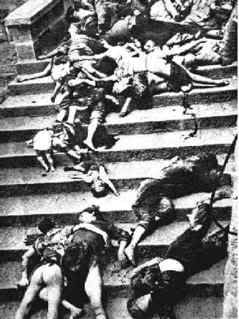
Although this weapon has existed since biblical times, there are a few major events in the modern era that have embodied the destruction of rape. Shown to the world via photographs, the infamous Rape of Nanking in 1937 was one incident that displayed the magnitude of destruction that rape can have on a culture. During this particular massacre, an estimated 20-80,000 Chinese women were raped by invading Japanese solders, many of whom were physically beaten, sexually abused, and then slaughtered. (BBC News…The Rape of Nanking)

Perhaps the most recent and extensive use of rape as a weapon has been in the Democratic Republic of Congo, located in central Africa. Established in 1960 under the name Republic of Congo, the country’s history has been characterized by political and social instability. This internal strife has not been helped by external conflict with the bordering nations of Rwanda and Uganda. In 1997, the Mobutu regime of Congo was internally overthrown with support from Rwanda and Uganda. A man by the name of Laurent Kabila then took over the country as a democratic leader, renaming the country under its current title. Nevertheless, Rwanda and Uganda intervened a second time in 1998 following the switch of government, which caused further fighting to break out (CIA World Factbook).

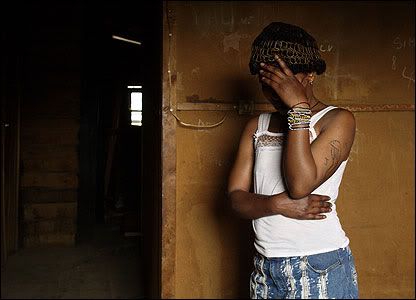
Finally, in 2003, it looked as though peace had been reached, as a treaty was signed by many of the conflicting parties. Unfortunately, though, this agreement ultimately did little to help the situation, and acts of violence continue to mar the lives of native people. Among them has been the raping of thousands of native women and girls by the various military forces, including both foreign and national armies. According to the video Congo: Rape as a Tool of War by the Washington Times, “Tens of thousands of women have been raped in Congo in the last ten years of civil war, most of them gang raped. According to the United Nations Population Fund, an average of 1,100 rape cases are reported each month.” The reason for using rape is that it is cheaper than using bullets, and it is guaranteed to keep a region submissive to authorities. Besides looking at statistics, many other stories and news reports have revealed the severity of the situation through other means. One photographer, Anna Kari, has taken photos in the Eastern provinces of the Congo, and Tales of Rape in the DR Congo is one such photo depicting the situation. This particular image illustrates the assistance and support needed by Congo as well as victims of rape in order to prevent further incidents from occurring. Specifically, technical elements including vectors of attention, framing, as well as coloration function to forward this argument via appeals to pathos and logos.

When one first looks at the photo, the girl immediately stands out, which plays an important role in the argument of the photo. One powerful element that contributes to this focal point is the way in which the image is framed and cropped. By isolating the general subjects of the photo: the receding room, the wall, and the girl, the number of elements available to the viewer is limited. Thus, via logos, the image is better able to “shap[e] someone else’s attention,” meaning the viewer’s (Compose, Design, Advocate, 285). In restricting the number of elements within the frame, the photo is able to direct the reader’s attention to specific aspects of the photo, which is where the visual hierarchy becomes important. Within this particular photo, the pinnacle of the hierarchy includes the girl, as she is the closest to the viewer. At this point, the viewer might briefly realize that she has a certain gesture to her, and could later return to examine this vector of attention in more depth.

After looking at the girl, the alignment of these key elements proceeds to direct the eyes of the audience to the condition of the building, presumably her house. The particular elements that are examined include the wall located behind the girl, as well as the receding room engulfed in shadow. Since they are the only other general subjects in the picture besides the girl, their vertical alignment and overall positioning make them important elements, although not as significant as the woman. In addition, since they are lower in the hierarchy, they serve as merely a backdrop to explain why the girl is acting in the way that she is. In this manner, one might see the clear division between the end of the wall and the empty room as a narrative to the image. Assuming the girl has been raped, (implied by the title), she has come from the secluded room to try and move on with her life, though she cannot forget it completely under her own power. This appeal to pathos through logos depicts the situation in a negative manner, as pertaining to the condition of the house. It also forces the audience to further examine the focal point of the photo, which is the girl.

Besides the framing and alignment of the photo, the coloration is another key element that relates to the argument of the image. In looking at the photo, there are generally two categories of color that are used. The receding room, which comprises the left third of the frame, as well as the wall are both dark hues: black and brown. The girl, however, is wearing a white top and blue jeans, which are much brighter hues. This difference in coloration creates high contrast between the girl and her background, thus reinforcing the notion that she is at the peak of the hierarchy. Furthermore, these hues enforce the narrative of the photo, as the dark hues from the shadows of the room are logically associated with the negative experiences the girl has had (rape). She has come out of that room, or her past, however, to stand against the wall, only to have some of the shadow tag along with her. This narrative, supported by the alignment and coloration, also reinforces the girl as the primary element of the photo, and plants a seed in the viewer that the girl needs assistance to feel safe and hopeful.

As the image uses various appeals to logos to direct the attention of the audience toward the woman, she is presented as the primary vector of attention within the photo. Positioned as such, further examination of her gestures reveals that her left hand covers her face, and so again, using logic, the audience looks to her body position and body language to figure out what she is doing. Vectors of attention do not pertain solely to the logos of a picture, however. As stated in Compose, Design, Advocate on page 352, “Vectors of attention are thus about…emotional connections within the photograph as well as between the photograph and the audience.” In this manner, the gestures that are portrayed by the girl’s body language contribute vastly to the pathos of this photo. With her left hand covering her face, the girl is hiding from the lens of the camera. Looking at the picture, then, the audience is unable to establish eye contact with her, which distances them somewhat from her specific situation. As onlookers, the issue then becomes the reason that she has masked her face. Logically, this body language might have something to do with her emotional state. In Compose, Design, Advocate, the author mentions “obvious pathos.” He says, “When we see people in a photograph, we might identify with them: we understand the situation they are in through our own experiences” (274). Although it is unlikely that many members of the audience have first-hand experience with rape, it makes sense that feelings pertaining to shame, embarrassment, or emotional instability might provoke such a response. Furthermore, these feelings are generally associated with victims of rape (RAINN). Thus, as onlookers, the pathos produced in the audience is one of sympathy, as the girl should not have to live in such an environment. Especially from a Western standpoint, which emphasizes humanity for all, the audience would most likely feel as though something needs to be done to improve and prevent this inhumane situation from occurring.
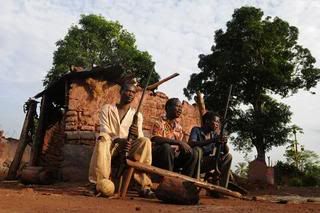
Through the use of isolation framing and contrasting coloration to highlight the woman as a vector of attention, the photo Tales of Rape in DR Congo supports the argument through pathos and logos that assistance and support is needed in this region. With the history of rape as seen through incidences such as the Rape of Nanking, as well as the current published photos and articles of the Congo, this image provokes a feeling of sympathy as pertaining to its audience. Looking at this situation from a Western perspective, however, this issue goes beyond this feeling of sympathy. What can be done to assist these victims of rape? Surely such mutiny of communities is inhumane and intolerable, but how is one to put an end to the situation? Although the problem lies with the armed forces in the region, in some cases it is against the same national army that is supposed to be protecting Congo citizens from the harm of neighboring countries. Perhaps the photo not only gives us insight into such a problem, but to the solution as well. The women of the area must not be afraid to unite and show their true faces.

Works Cited

"BBC News, World, Scarred by history: The Rape of Nanking." BBC NEWS News Front Page. 13 Dec. 1997. Web. 01 Mar. 2010. .

"BBC NEWS: Photo journal: Tales of rape in DR Congo." BBC NEWS, News Front Page. 2007. 17 Feb. 2010

"CIA - The World Factbook -- Congo, Democratic Republic of the." Welcome to the CIA Web Site Central Intelligence Agency. 15 Jan. 2010. 18 Feb. 2010

Congo's Greatest Shame: Rape as a Tool of War. Youtube. Washington Times, 8 Sept. 2009. Web. 1 Mar. 2010. .

"Effects of Sexual Assault RAINN Rape, Abuse and Incest National Network." RAINN; Rape, Abuse and Incest National Network. 31 Feb. 2010. Web. 04 Mar. 2010. .


Monday, March 1, 2010

WP1: Rough Draft


Throughout history, the weapon of rape has played a role and often accompanied acts of war between different cultures and countries. With the goal being to humiliate and devastate the community, this weapon shows the supremacy and dominance of the conqueror via the sexual violation of women. Gruesome and inhumane, it is often extremely horrific, yet effective because of the silence that supplements this weapon. In addition to the negative physical effects, women typically feel weak, dejected, and unhopeful following acts of rape, which does nothing to hinder further acts of rape.

Although this weapon has existed since biblical times, there are a few major events in the modern era that have embodied the destruction of rape. Shown to the world via photographs, the infamous Rape of Nanking in 1937 was one incident that displayed the magnitude of destruction that rape can have on a culture. During this particular massacre, an estimated 20-80,000 Chinese women were raped by invading Japanese solders, many of whom were physically beaten, raped, and then slaughtered. (BBC News…The Rape of Nanking)

Perhaps the most recent and extensive use of rape as a weapon has been in the Democratic Republic of Congo, located in central Africa. Established in 1960 under the name Republic of Congo, the country’s history has been characterized by political and social instability. This internal strife has not been helped by external conflict with the bordering nations of Rwanda and Uganda. In 1997, the Mobutu regime, which was the empowered government in Congo, was overthrown with the support of Rwanda and Uganda. Following this, a man by the name of Laurent Kabila took over the country as a democratic leader, renaming the country under its current title. Nevertheless, Rwanda and Uganda intervened a second time in 1998 following the switch of government, which caused further fighting to break out (CIA World Factbook).

Finally, in 2003, a peace agreement was reached between the many conflicting parties, however terrible acts of violence continue to mar the lives of native people in the country. Among them has been the raping of thousands of native women and girls by the various military forces, including both foreign and national armies. According to the video Congo: Rape as a Tool of War by the Washington Times, “Tens of thousands of women have been raped in Congo in the last ten years of civil war, most of them gang raped. According to the United Nations Population Fund, an average of 1,100 rape cases are reported each month.” Many other stories and news reports have also revealed the severity of the situation in ways other than statistics. One photographer, Anna Kari, has taken photos in the Eastern provinces of the Congo, and Tales of Rape in the DR Congo is one such photo depicting this situation. This particular image illustrates the assistance and support needed by Congo as well as victims of rape in order to prevent further incidents from occurring. Specifically, technical elements including vectors of attention, framing, as well as coloration function to forward this argument via appeals to pathos and logos.

When one first looks at the photo, the girl immediately stands out, which plays an important role in the argument of the photo. Called a vector of attention, part of the reason that the girl is immediately noticeable is due to the alignment of the photo, as well as the way in which she is positioned. As a result of her face being covered by her left hand, the audience then logically looks to her body position and body language in order to decipher what she is thinking and doing.
Not only do vectors of attention pertain to the logos of a picture, however. As stated in Compose, Design, Advocate on page 352, “Vectors of attention are thus about…emotional connections within the photograph as well as between the photograph and the audience.” In this manner, the gestures that are portrayed by the girl’s body language contribute vastly to the pathos of this photo. With her left hand covering her face and right arm wrapping around her abdomen, an enormous amount of emotional information is established between the audience and the girl. As a result of the girl looking to the ground and hiding her eyes behind her hand, she does not make eye contact with the viewer, which distances the audience from her and positions them as observers. Although her facial expression cannot be seen, the act in and of itself produces a vastly important argument to the reader. In Compose, Design, Advocate, the author talks about obvious pathos. He says, “When we see people in a photograph, we might identify with them: we understand the situation they are in through our own experiences” (274). While the audience probably will not be able to directly relate through the experience of rape, they still have the ability to connect via feelings of humiliation, pain, etc. Thus, as onlookers, the pathos produced in the audience is one of sympathy: they feel as though something needs to be done to make this inhumane situation better.

Besides the vectors of attention within the photo, another element that contributes to the argument of the photo is the way in which the image is framed and cropped. By isolating the general subjects of the receding room, wall, and the girl, the photo limits the number of elements available to the viewer. Thus, via logos, the image is better able to “shap[e] someone else’s attention,” meaning the viewer’s (Compose, Design, Advocate, 285). In restricting the number of elements within the frame, the photo is able to direct the reader’s attention to specific aspects of the photo, upon which the visual hierarchy becomes important. Within this particular photo, the top of the hierarchy includes the girl, as she is the closest to the viewer, and sticks out the most. This, in turn, allows the reader to focus on her gestures, which relate to the pathos represented by this vector of attention.

The alignment of the photo, then, goes on to direct the eyes of the audience to the condition of the house, as well as the receding room: these are the other general subjects in the picture besides the girl. The clear division between the end of the wall, and the empty room perhaps portrays a logical narrative to the image: the girl has come from the secluded room to try and move on with her life, though she cannot forget it completely on her own power. This appeal to pathos through logos depicts the situation in a manner in which the situation is bad, as pertaining to the conditions of the house, as well as the emotional and psychological condition of the girl; reinforcing the notion that she needs help.

Lastly, the coloration of the photo is a key element that relates to the argument that the image makes. In looking at the photo, the receding room comprises more than one-third of the area on the left, and the wall that the girl is standing in front of is comprised of a brown hue as well. The girl, however, is wearing a white top and blue jeans, which are much brighter hues. This difference in hue creates high contrast between the girl and the background, thus making her stand out. This contrast is yet another reason why the girl is at the top of the hierarchy within the image. Furthermore, these dark hues from the shadows of the room logically illustrate or correspond with the negative experiences the girl has had in the past (rape). She has come out of that room, or her past, however, to stand against the wall, only to have some of the shadow still with her. This narrative, supported by the alignment and coloration, also maintains the notion of pathos that she is in pain, and needs assistance to feel safe and acquire some hope.

Through the gesture of the girl as a vector of attention, the isolation framing, as well as the contrast in coloration, the photo Tales of Rape in DR Congo presents the argument through pathos and logos that assistance and support is needed within the Congo. With the history of rape as seen through incidences such as the Rape of Nanking, as well as the current photos and articles published of the Congo, this image provokes a feeling of sympathy as pertaining to its audience. Looking at this situation from a Western perspective, this sympathy then leads to the desire to help change the situation, whether that be in-person or through a third party. Such mutiny of communities and villages is inhumane, and should not be tolerated.

Works Cited

"BBC News, World, Scarred by history: The Rape of Nanking." BBC NEWS News Front Page. 13 Dec. 1997. Web. 01 Mar. 2010. .

"BBC NEWS: Photo journal: Tales of rape in DR Congo." BBC NEWS, News Front Page. 2007. 17 Feb. 2010

"CIA - The World Factbook -- Congo, Democratic Republic of the." Welcome to the CIA Web Site Central Intelligence Agency. 15 Jan. 2010. 18 Feb. 2010

Congo's Greatest Shame: Rape as a Tool of War. Youtube. Washington Times, 8 Sept. 2009. Web. 1 Mar. 2010. .

Sunday, February 21, 2010

WP1: Statement of Purpose

In the modern world, one observes millions of advertisements and other forms of communication on a daily basis, each of which establishes an argument based on a purpose. Whether it be a speech, text, video, picture, or another type of communication, this underlying motivation is extremely important for the success of the argument. Therefore, whenever creating an essay such as a rhetorical analysis, it is essential to keep this purpose as well as the audience and context of the paper in mind.

The picture entitled Photo journal, Tales of rape in DR Congo has an extremely compelling story behind it. The way that the photographer composed this image, however, does more than simply document the event: it produces an argument which in turn is backed up using the appeals of ethos, pathos, and logos. In writing a rhetorical analysis on this photo, I will be attempting to explain and provide some insight as to what this argument is, as well as depicting the reinforcing evidence using the modes of appeal. Although my primary purpose is to reveal the message by clearly decomposing and sifting through the argument, I also have a secondary objective, which is to fulfill a requirement for my English 151 class.

One aspect that is extremely important
when developing an argument is to think about the audience, or recipients, of the information. In doing this, one understands the best way to go
about delivering the message, as well as what to say within the paper in order to clearly address the argument. As pertaining to the rhetorical analysis, my primary audience includes my teacher, current classmates, as well as future students in English 151. When looking at these members in particular, my teacher will ultimately be the one assessing how well I am able to depict the message of the photo. As such, I need to consider the various regulations and suggestions he gives for the assignment, and use these in order to develop a strong analysis. As far as the rest of my primary audience, they will more than likely be familiar with the technical terms used within rhetorical analysis papers (such as the modes of appeal), and as such, it gives me the ability to use these terms freely. In addition, they are already familiar with the blog format used, which is an advantage to posting an essay in this medium.

Based on the fact, however, that the rhetorical analysis will be published in this blog setting, there is no predicting who might stumble across it. Thus, besides the primary audience, a secondary audience can be established. This category includes viewers who may come across the blog as a result of a google search for the Democratic Republic of Congo, etc. Furthermore, it may even consist of administrators from UNL who are seeking examples of student work. This is also relevant information to consider when crafting the argument, especially because they might not have the same viewpoint as my primary audience. For example,
it is unlikely that the secondary audience will be as familiar with terms pertaining to rhetorical analysis essays. In addition, the blog environment may appear to be less creditable to these people than an argument in paper format. As such, it is important that I consider my creditability as an author.


After looking at both the primary and secondary audiences, it can be established that neither group will have likely seen the image before, and that everyone will view the blog via a computer. In considering this context, which is another essential element to assess when communicating, I need to depict the essay in a concise manner, explaining and perhaps defining important terms. In addition, it is necessary to validate the essay in its blog format through the use of respectable sources (such as Compose, Design, Advocate) to give the essay credibility. In addition, using various strategies of logos, including parallel structures, deductive reasoning, etc, are also essential in the creation of the argument. Overall, if I keep these various elements in mind, as well as the purpose of the essay in general, my analysis will be much more complete and effective.


Wednesday, February 17, 2010

WP1: Pre-Writing Assignment 3

After researching more about the historical and cultural context of the Democratic Republic of Congo, I am able to reexamine the photo labeled "Tales of Rape" in a new light. The Democratic Republic of Congo is located in central Africa, and is bordered by nine countries including Sudan, Rwanda, and Uganda. Established in 1908 as a Belgian colony and then gaining its independence in 1960 under the name Republic of the Congo, the country's history has been characterized by political and social instability. In 1997, the Mobutu regime was overthrown with the support of Rwanda and Uganda. Following this, a man by the name of Laurent Kabila took over the country as a democratic leader, renaming the country under its current title. Nevertheless, Rwanda and Uganda intervened a second time in 1998 following the switch of government, which caused further fighting to break out. Finally, in 2003, a peace agreement was reached between the many parties, but terrible acts of violence continue to mar the lives of native people in the country.
One of the most tragic themes throughout the Congo's history of conflict has been the hundreds of thousands of rapes that have occurred. With the large number of armed forces commuting throughout the country, many male soldiers have taken advantage of local women as well as girls. Particularly noted have been the thousands of victims in the eastern part of the country. In the midst of a financial crisis, many women and girls have either volunteered or been forced to join the national army. After spending years living with male soldiers, many of these females tell of how they were raped. Despite their age or desires to resist the men, soldiers would come in, one after another, and do anything they wanted with the women. A weak and exposed self-conscious was only one side effect of these actions, while pregnancies produced many more complications.
With all of this historical information in mind, my perception of the original photograph has changed slightly. Although I knew that the girl in the picture was probably raped, I now know that she was a member of the national army when she was taken advantage of several times a day. This more or less explains her gesture in the photo, and gives a reason for the photographer to frame her in the manner that she did. It also explains the dark colors of the photo, which mirror the dark emotions overflowing from her soul. The girl eventually escaped the army and was living with her family when the picture was taken, her home being the background of the photo. Furthermore, the author may have purposefully incorporated the dark room to the left as a symbol for the dark past that she is so desperately trying to forget. As far as showing the wall, its naked condition depicts just how poor this family is, which in turn explains the girl's need to join the army in the first place.

Works Cited

"BBC NEWS: Photo journal: Tales of rape in DR Congo." BBC NEWS, News Front Page. 2007. 17 Feb. 2010

"CIA - The World Factbook -- Congo, Democratic Republic of the." Welcome to the CIA Web Site Central Intelligence Agency. 15 Jan. 2010. 18 Feb. 2010 .

Monday, February 15, 2010

WP1: Pre-Writing Assignment 2

A professional photographer has many technical aspects to think about when shooting a particular subject. By varying the arrangement, framing, lighting, focus, coloration, and many other elements, the photographer can drastically change the way the audience views the photo. In the picture entitled "Tales of Rape in DR Congo," Anna Kari employs many of these technical aspects while capturing the image of a girl in the Democratic Republic of Congo.

The first technical aspect that Kari may have thought about is the arrangement of the subjects within the photo. One notices that the girl takes up about a fourth of the image towards the right side of the picture, and that she is leaning against a bare wall, which extends along the right two-thirds of the photo. The left third, then, is comprised of the receding room within the structure, bathed in darkness. This arrangement and orientation of these subjects gestures toward the appeal of logos, as they give the viewer a sense of the surroundings. Since there are relatively few elements within the composition, the hue of the girl's clothing contrasts with the sameness of the background, producing a hierarchy. Logically, this girl, then becomes the focal point of the piece, which feeds the emotional side of the piece, or pathos. Also contributing to this logos, however, is the way in which the title and the picture work together to inform the reader of the background of the situation. Specifically, the title depicts what has happened to the girl: that she has been part of a rape scenario, and the picture, then, informs the reader how the girl feels about what is depicted in the title.

In going back to the vectors of attention within the photo and seeing how they pertain to the pathos, the girl's eyes attract attention, even though they are not visible. By covering up her eyes, the girl makes no eye contact with the viewer, thus establishing their position as an observer. Nonetheless, the audience is still able to relate,
to some extent, to the emotions that the girl is
projecting. This aspect of the piece thus contributes to the emotions evoked by the viewer. Furthermore, the lighting and coloration of the photo compliment the emotions of the viewer, as the shadows produce many black hues. These hues, which also have very little brightness, typically have negative connotations: gloom, depression, and sadness. Thus, since the majority of the photo contains these hues, these feelings are conveyed to the viewer. In addition, the white top that the girl has on may elicit a feeling of innocence from the reader; especially when viewed with the title.

One last important element in the piece is framing. The photographer chose to get close to the girl; exposing her gestures as well as the bare wall and the dark, mysterious room. This contributes to the emotion of the viewer, but also to the ethos, as it sheds some light on the photographer's opinion of the subject.