Sunday, February 21, 2010

WP1: Statement of Purpose

In the modern world, one observes millions of advertisements and other forms of communication on a daily basis, each of which establishes an argument based on a purpose. Whether it be a speech, text, video, picture, or another type of communication, this underlying motivation is extremely important for the success of the argument. Therefore, whenever creating an essay such as a rhetorical analysis, it is essential to keep this purpose as well as the audience and context of the paper in mind.

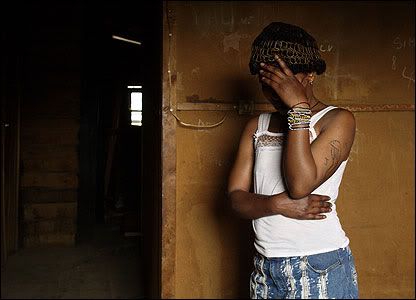
The picture entitled Photo journal, Tales of rape in DR Congo has an extremely compelling story behind it. The way that the photographer composed this image, however, does more than simply document the event: it produces an argument which in turn is backed up using the appeals of ethos, pathos, and logos. In writing a rhetorical analysis on this photo, I will be attempting to explain and provide some insight as to what this argument is, as well as depicting the reinforcing evidence using the modes of appeal. Although my primary purpose is to reveal the message by clearly decomposing and sifting through the argument, I also have a secondary objective, which is to fulfill a requirement for my English 151 class.
One aspect that is extremely important
when developing an argument is to think about the audience, or recipients, of the information. In doing this, one understands the best way to go
about delivering the message, as well as what to say within the paper in order to clearly address the argument. As pertaining to the rhetorical analysis, my primary audience includes my teacher, current classmates, as well as future students in English 151. When looking at these members in particular, my teacher will ultimately be the one assessing how well I am able to depict the message of the photo. As such, I need to consider the various regulations and suggestions he gives for the assignment, and use these in order to develop a strong analysis. As far as the rest of my primary audience, they will more than likely be familiar with the technical terms used within rhetorical analysis papers (such as the modes of appeal), and as such, it gives me the ability to use these terms freely. In addition, they are already familiar with the blog format used, which is an advantage to posting an essay in this medium.

Based on the fact, however, that the rhetorical analysis will be published in this blog setting, there is no predicting who might stumble across it. Thus, besides the primary audience, a secondary audience can be established. This category includes viewers who may come across the blog as a result of a google search for the Democratic Republic of Congo, etc. Furthermore, it may even consist of administrators from UNL who are seeking examples of student work. This is also relevant information to consider when crafting the argument, especially because they might not have the same viewpoint as my primary audience. For example,
it is unlikely that the secondary audience will be as familiar with terms pertaining to rhetorical analysis essays. In addition, the blog environment may appear to be less creditable to these people than an argument in paper format. As such, it is important that I consider my creditability as an author.


After looking at both the primary and secondary audiences, it can be established that neither group will have likely seen the image before, and that everyone will view the blog via a computer. In considering this context, which is another essential element to assess when communicating, I need to depict the essay in a concise manner, explaining and perhaps defining important terms. In addition, it is necessary to validate the essay in its blog format through the use of respectable sources (such as Compose, Design, Advocate) to give the essay credibility. In addition, using various strategies of logos, including parallel structures, deductive reasoning, etc, are also essential in the creation of the argument. Overall, if I keep these various elements in mind, as well as the purpose of the essay in general, my analysis will be much more complete and effective.

Wednesday, February 17, 2010

WP1: Pre-Writing Assignment 3

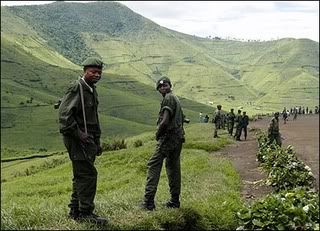
After researching more about the historical and cultural context of the Democratic Republic of Congo, I am able to reexamine the photo labeled "Tales of Rape" in a new light. The Democratic Republic of Congo is located in central Africa, and is bordered by nine countries including Sudan, Rwanda, and Uganda. Established in 1908 as a Belgian colony and then gaining its independence in 1960 under the name Republic of the Congo, the country's history has been characterized by political and social instability. In 1997, the Mobutu regime was overthrown with the support of Rwanda and Uganda. Following this, a man by the name of Laurent Kabila took over the country as a democratic leader, renaming the country under its current title. Nevertheless, Rwanda and Uganda intervened a second time in 1998 following the switch of government, which caused further fighting to break out. Finally, in 2003, a peace agreement was reached between the many parties, but terrible acts of violence continue to mar the lives of native people in the country.
One of the most tragic themes throughout the Congo's history of conflict has been the hundreds of thousands of rapes that have occurred. With the large number of armed forces commuting throughout the country, many male soldiers have taken advantage of local women as well as girls. Particularly noted have been the thousands of victims in the eastern part of the country. In the midst of a financial crisis, many women and girls have either volunteered or been forced to join the national army. After spending years living with male soldiers, many of these females tell of how they were raped. Despite their age or desires to resist the men, soldiers would come in, one after another, and do anything they wanted with the women. A weak and exposed self-conscious was only one side effect of these actions, while pregnancies produced many more complications.
With all of this historical information in mind, my perception of the original photograph has changed slightly. Although I knew that the girl in the picture was probably raped, I now know that she was a member of the national army when she was taken advantage of several times a day. This more or less explains her gesture in the photo, and gives a reason for the photographer to frame her in the manner that she did. It also explains the dark colors of the photo, which mirror the dark emotions overflowing from her soul. The girl eventually escaped the army and was living with her family when the picture was taken, her home being the background of the photo. Furthermore, the author may have purposefully incorporated the dark room to the left as a symbol for the dark past that she is so desperately trying to forget. As far as showing the wall, its naked condition depicts just how poor this family is, which in turn explains the girl's need to join the army in the first place.

Works Cited

"BBC NEWS: Photo journal: Tales of rape in DR Congo." BBC NEWS, News Front Page. 2007. 17 Feb. 2010

"CIA - The World Factbook -- Congo, Democratic Republic of the." Welcome to the CIA Web Site Central Intelligence Agency. 15 Jan. 2010. 18 Feb. 2010 .

Monday, February 15, 2010

WP1: Pre-Writing Assignment 2

A professional photographer has many technical aspects to think about when shooting a particular subject. By varying the arrangement, framing, lighting, focus, coloration, and many other elements, the photographer can drastically change the way the audience views the photo. In the picture entitled "Tales of Rape in DR Congo," Anna Kari employs many of these technical aspects while capturing the image of a girl in the Democratic Republic of Congo.

The first technical aspect that Kari may have thought about is the arrangement of the subjects within the photo. One notices that the girl takes up about a fourth of the image towards the right side of the picture, and that she is leaning against a bare wall, which extends along the right two-thirds of the photo. The left third, then, is comprised of the receding room within the structure, bathed in darkness. This arrangement and orientation of these subjects gestures toward the appeal of logos, as they give the viewer a sense of the surroundings. Since there are relatively few elements within the composition, the hue of the girl's clothing contrasts with the sameness of the background, producing a hierarchy. Logically, this girl, then becomes the focal point of the piece, which feeds the emotional side of the piece, or pathos. Also contributing to this logos, however, is the way in which the title and the picture work together to inform the reader of the background of the situation. Specifically, the title depicts what has happened to the girl: that she has been part of a rape scenario, and the picture, then, informs the reader how the girl feels about what is depicted in the title.

In going back to the vectors of attention within the photo and seeing how they pertain to the pathos, the girl's eyes attract attention, even though they are not visible. By covering up her eyes, the girl makes no eye contact with the viewer, thus establishing their position as an observer. Nonetheless, the audience is still able to relate,
to some extent, to the emotions that the girl is
projecting. This aspect of the piece thus contributes to the emotions evoked by the viewer. Furthermore, the lighting and coloration of the photo compliment the emotions of the viewer, as the shadows produce many black hues. These hues, which also have very little brightness, typically have negative connotations: gloom, depression, and sadness. Thus, since the majority of the photo contains these hues, these feelings are conveyed to the viewer. In addition, the white top that the girl has on may elicit a feeling of innocence from the reader; especially when viewed with the title.

One last important element in the piece is framing. The photographer chose to get close to the girl; exposing her gestures as well as the bare wall and the dark, mysterious room. This contributes to the emotion of the viewer, but also to the ethos, as it sheds some light on the photographer's opinion of the subject.

Wednesday, February 10, 2010

WP1: Pre-Writing Assignment 1

The above picture is part of a series of nine photos on BBC News' website called "Photo journal, Tales of rape in DR Congo." As seen in the context of this website, the picture is the only image on the page, and it is accompanied by a short 100 word caption that describes the photo's background information. The subject matter of the photo includes a girl from the Democratic Republic of Congo, who is leaning up against a wall in what appears to be her home. Due to the bare walls, naked electrical wires and what appears to be a dirt floor, the home belongs to a lower-class family. In addition, although she is wearing a white shirt and jeans, one can assume that the girl is from the Dominican, as she is wearing beads on her wrist as well as a locally manufactured hat.

Besides the girl's clothing and the condition of the building, there are also many gestures of the photo that depict various aspects of the situation. The girl is is not only leaning against the wall, but she is covering her face with her hand. This specific gesture makes it appear as though she is lonely, ashamed, depressed, etc. When transplanted into the context of the website, the title of the photo substantially increases this feeling, as the word rape emphasizes many of these connotations. Like the girl, the building behind her captures a certain quality or gesture in its primitive state. The shadows within the house created by a lack of lighting give the viewer a sense of unease. All of these combined elements, conditions, subject matter, and gestures culminate in an argument designed to make the viewer react in a particular manner. Personally, this photo makes me feel slightly depressed, and it makes me wonder how it is that peace is such a difficult concept to achieve. Since the depressive state of the girl and the dark, run-down state of the house work together in creating a sense of despair, it is easy for me to have this particular feeling. This, in turn, prompts me to think about the situation. Why did it happen? What is wrong in society that culminates in this scenario of rape?

Saturday, February 6, 2010

Weekly Blog Post 7

Photography is something as an "artist" that I am interested in. I believe that pictures have the ability to depict extremely powerful messages, and as such, I do have a desire to learn how to ultimately capture these themes through the lens of a camera. Growing up, I was exposed to some of the intricacies that go along with taking pictures, as one of my dad's hobbies is to photograph various subjects. In college, he worked for "The Picture Man," shooting weddings and other events, and as a result, he knows a fair amount about the subject. Thus, I have picked up some of the basics through him, such as how to frame pictures in a dynamic way, and a little bit about the lighting. This being said, I am by no means an experienced photographer, nor do I own any sophisticated equipment. I would say that I most enjoy taking pictures of landscapes and older buildings, but am not one of those people who carry a camera with him around the clock (the one on my phone doesn't count). While some people take pictures primarily of their friends to post on facebook, the photos that I end up shooting are mostly during trips, and consist of mountainous scenes, famous buildings, etc. Since I have an interest in painting and drawing, sometimes I will take these pictures and then replicate them via one of these techniques.


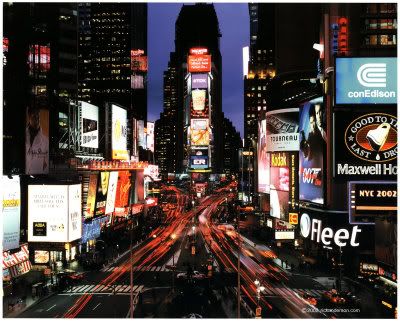
As a class, we will be writing our first paper about a photograph, and how it uses various modes of appeal to pose an argument to the viewer. I feel that being able to better analyze and observe photographs goes hand in hand with how well one knows how to take a picture. One aspect of photography that I would particularly like to improve is how to capture light through time. Many times, at night there are scenes, especially in cities, of the lights of cars moving through the streets. Allowing more light to enter the lens via a longer exposure window allow these lines to blur, resulting in a photo that depicts this time. I think that this type of photo has the ability to portray a message about this time, and I would like to learn how to do this.